- Ocean animals
- 42 pages
- Letter and A4
42 Stingray Coloring Pages (Free PDF Printables)
A stingray's tail spine is shed and replaced again and again, so for a while a ray can carry two spines at once.

These pages explore warm, shallow seas where stingrays glide over sand and reefs. You will see southern stingrays buried with only their eyes showing, blue-spotted stingrays resting near coral, rays swimming with rippling fins and pups beside adults. Some pages are flat, top-down views that make great pattern designs.
Simple pages show one ray with a clean diamond outline and thick lines, easy for small hands. Detailed seafloor scenes with sand ripples, seagrass, shells and reef fish are better for older children and adults.
Stingray coloring pages
-
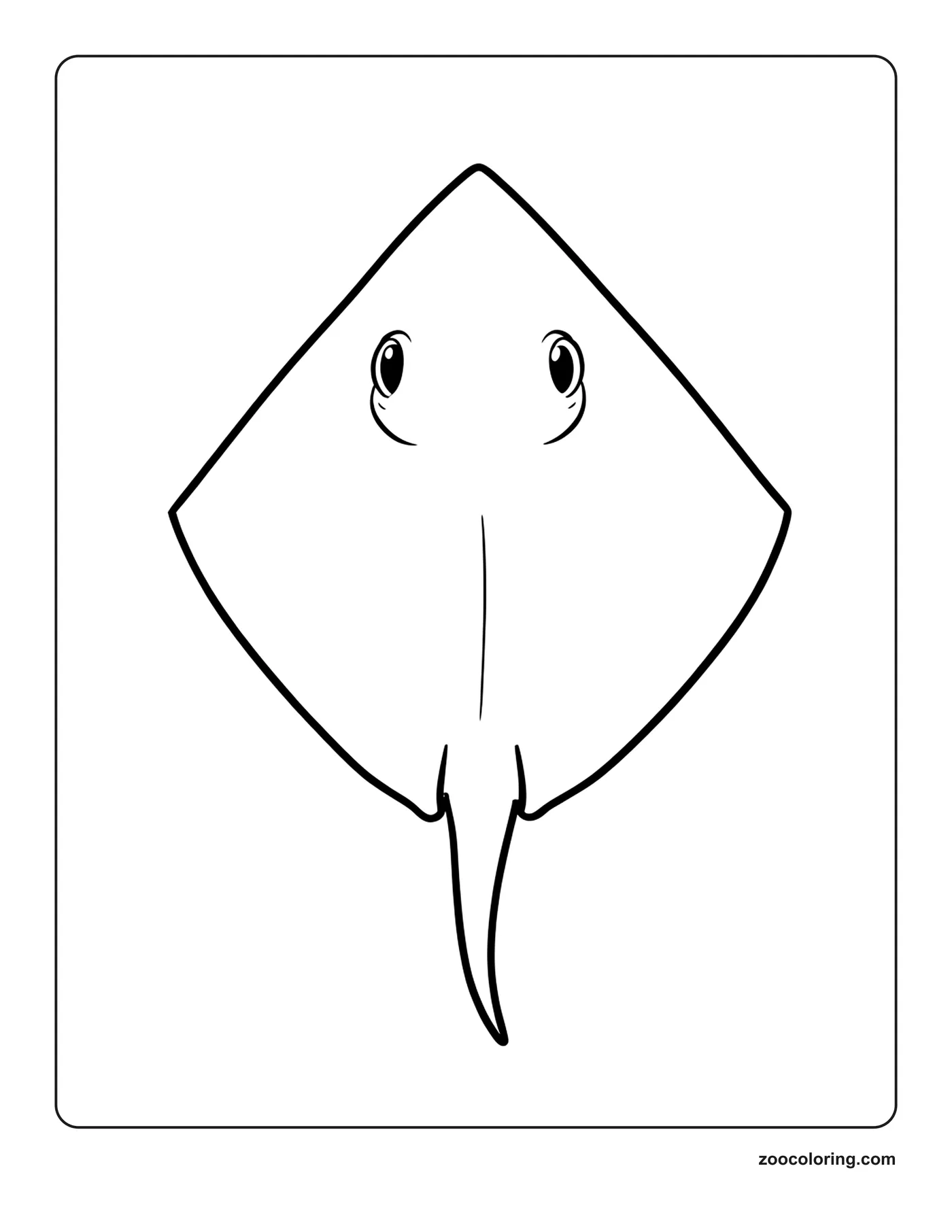
A Stingray Seen From Above
A diamond-shaped ray with a long tail, drawn in bold, clean lines.
Download PDF -
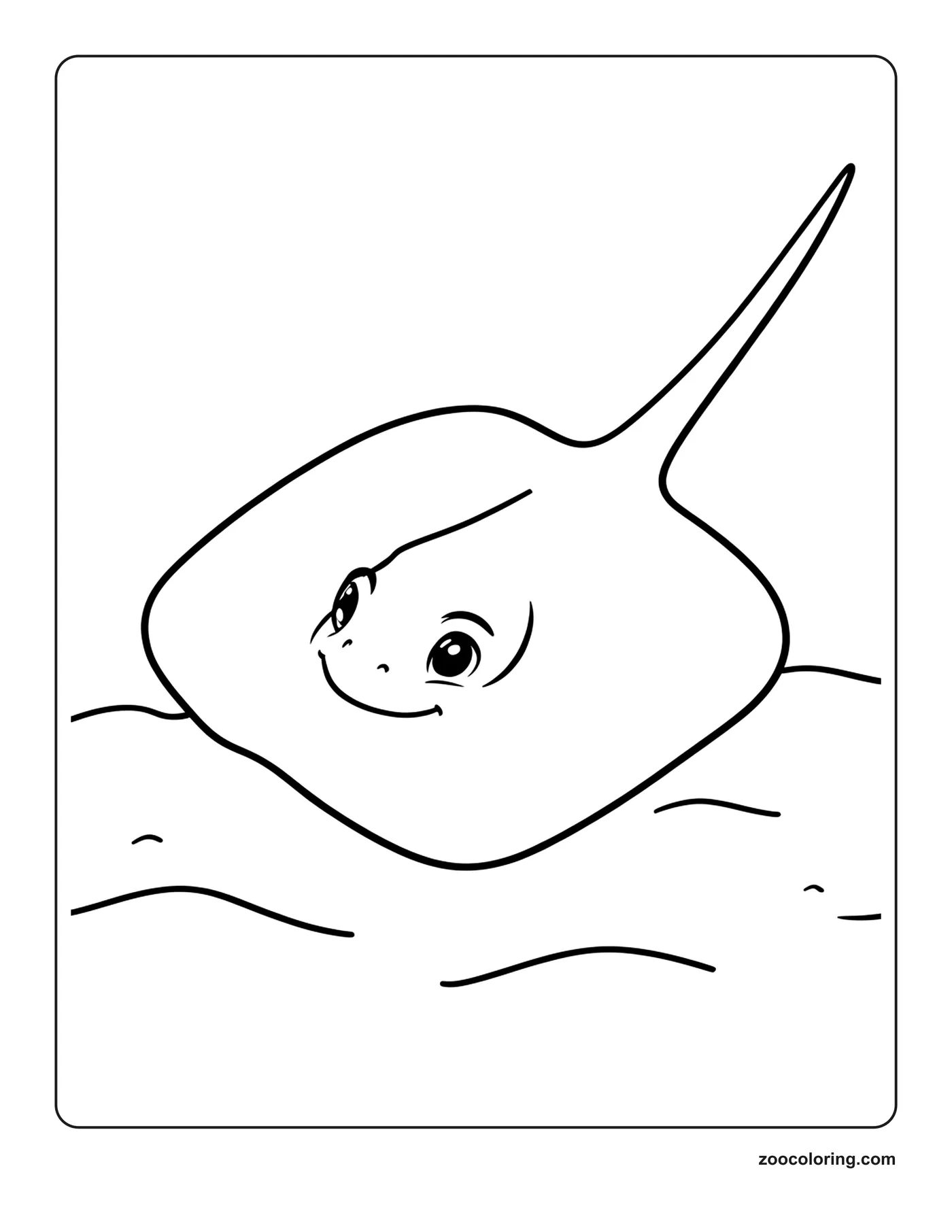
A Stingray Gliding Through Water
A ray swims forward with the edges of its disc gently curved.
Download PDF -
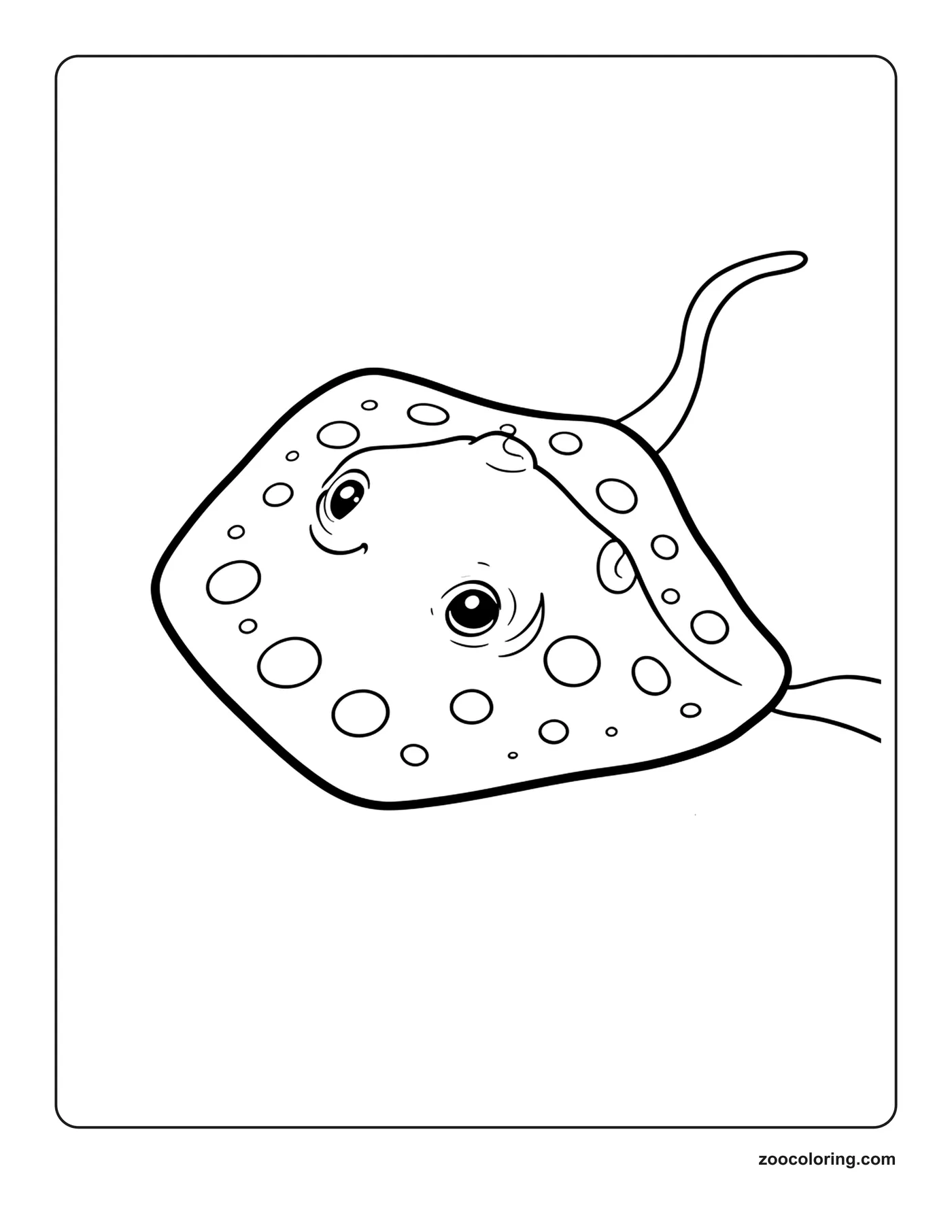
A Blue-Spotted Stingray Resting
An oval ray with big round spots to fill in bright colors.
Download PDF -
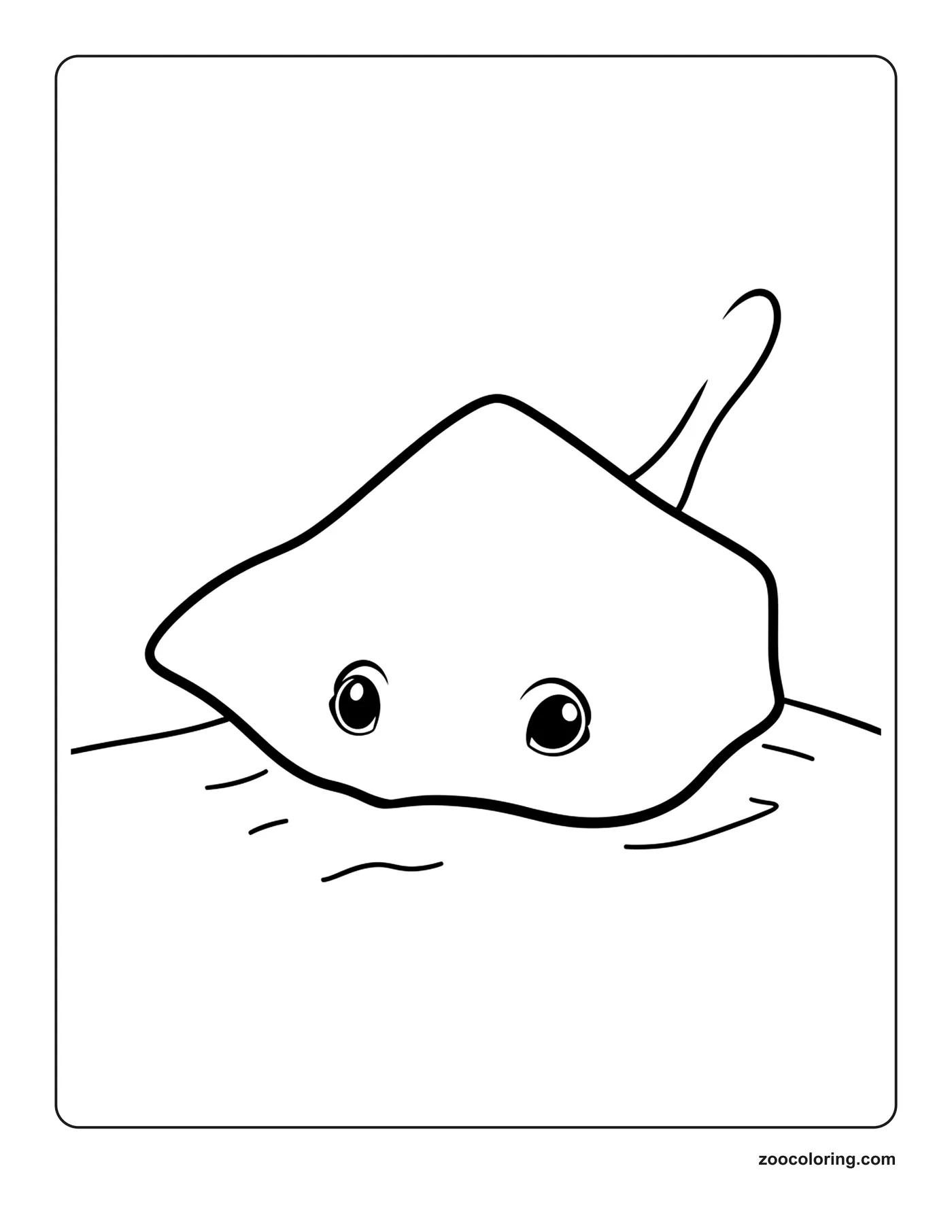
A Stingray Partly Buried in Sand
Only the eyes and edge of a ray show above a simple sandy bottom.
Download PDF -
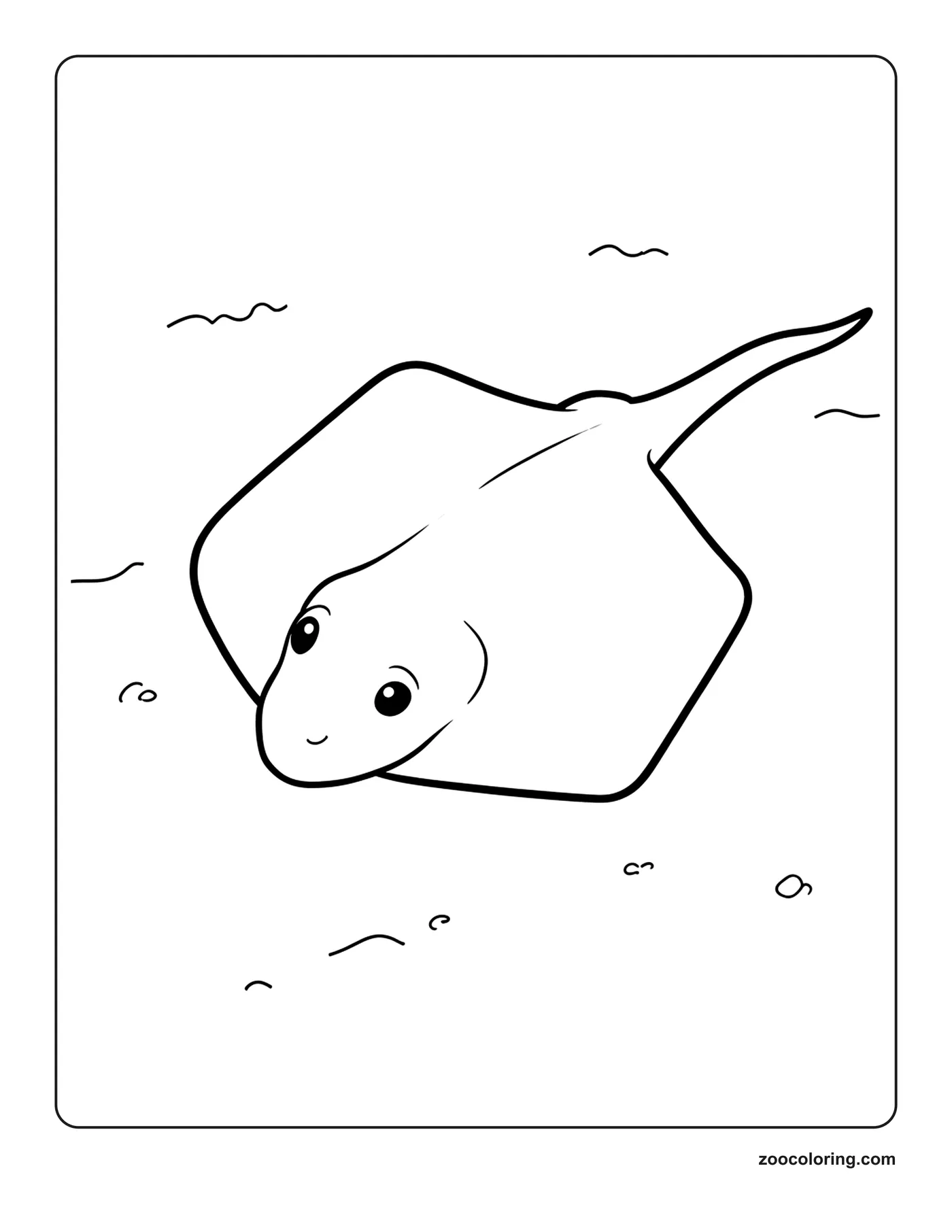
A Baby Stingray
A small, round stingray pup glides alone with its tail trailing behind.
Download PDF -
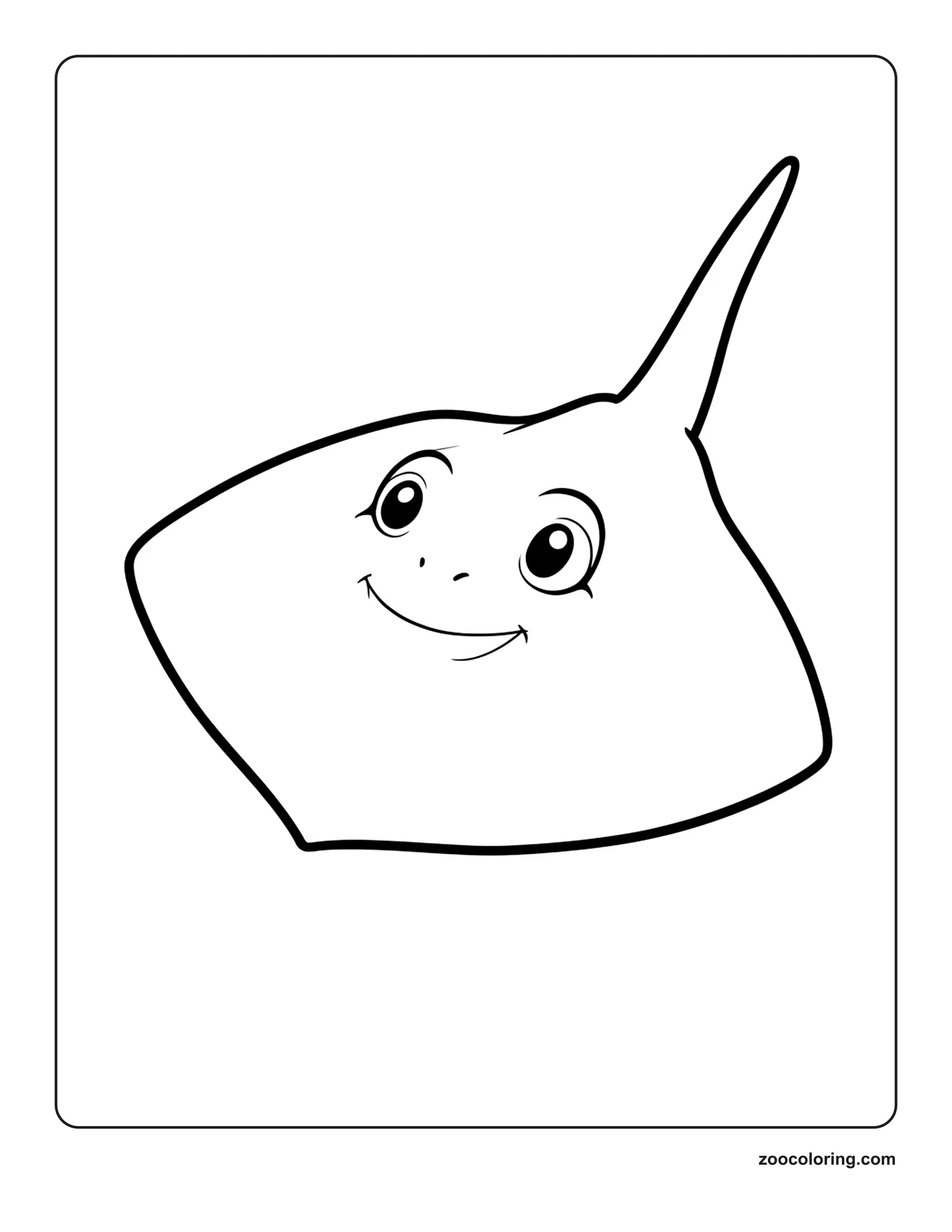
A Stingray Eyes and Spiracles Close-Up
A close view of the raised eyes and spiracle openings on top of the head.
Download PDF -
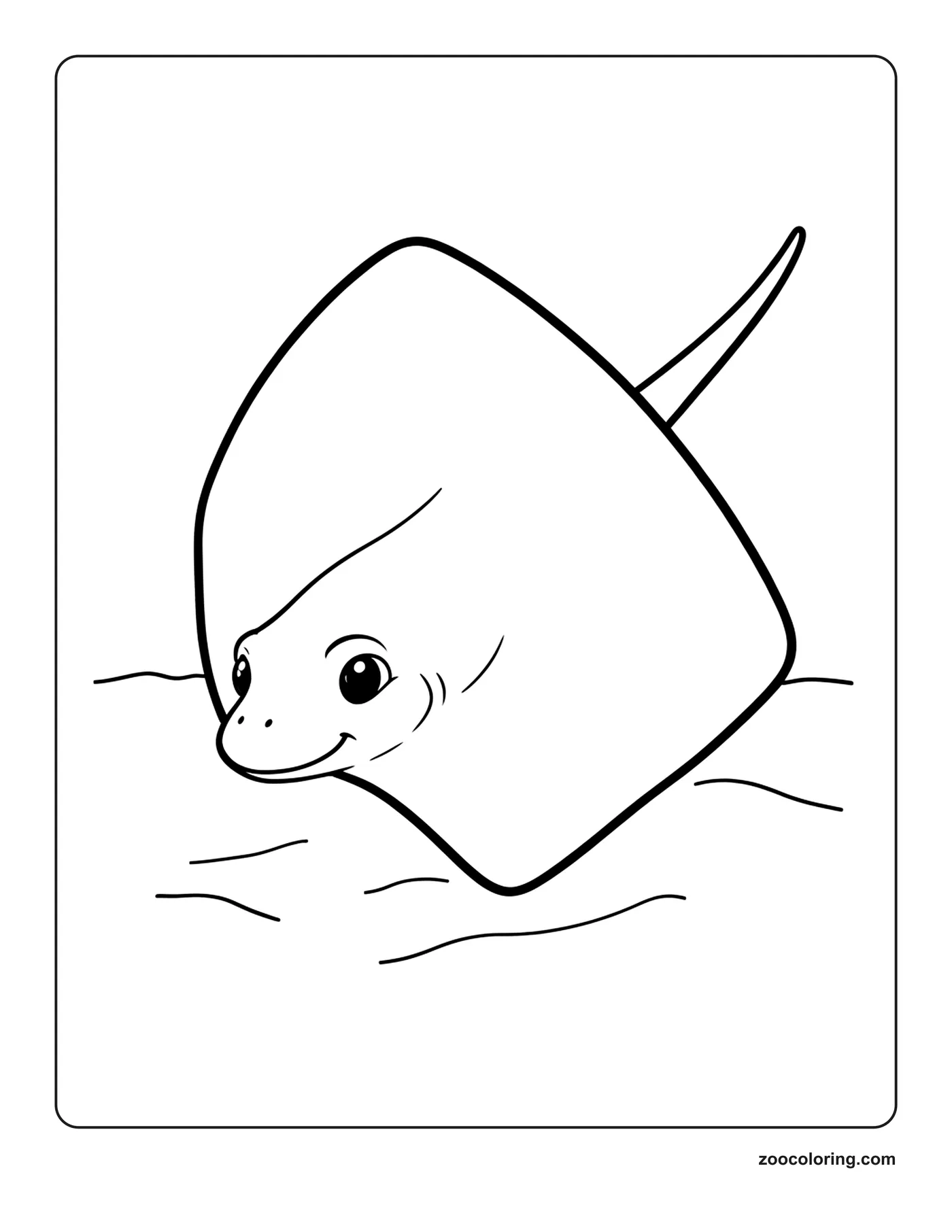
A Stingray Turning in Open Water
A ray tilts one side of its disc up as it turns.
Download PDF -
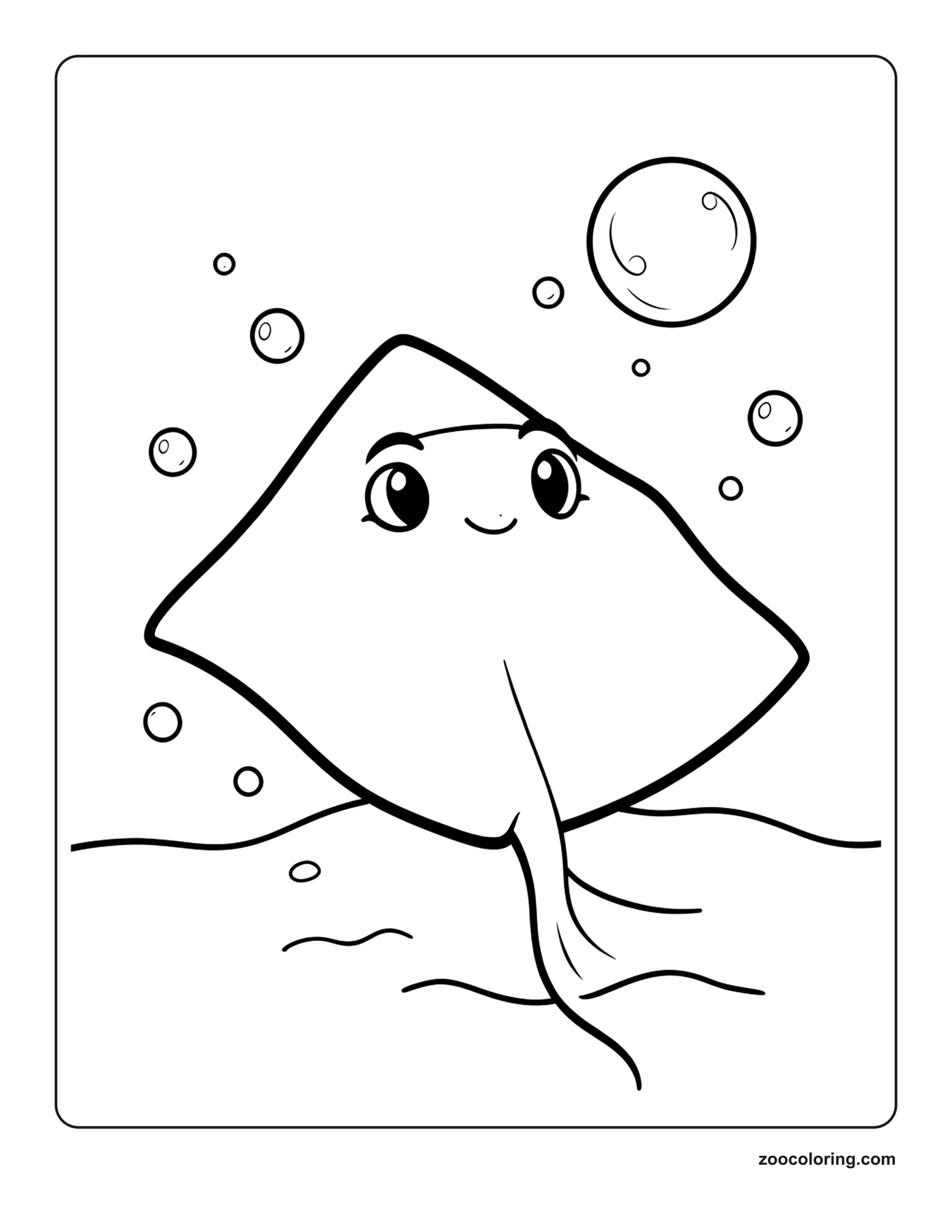
A Stingray With a Few Bubbles
One ray and several round bubbles, a calm and easy page.
Download PDF -
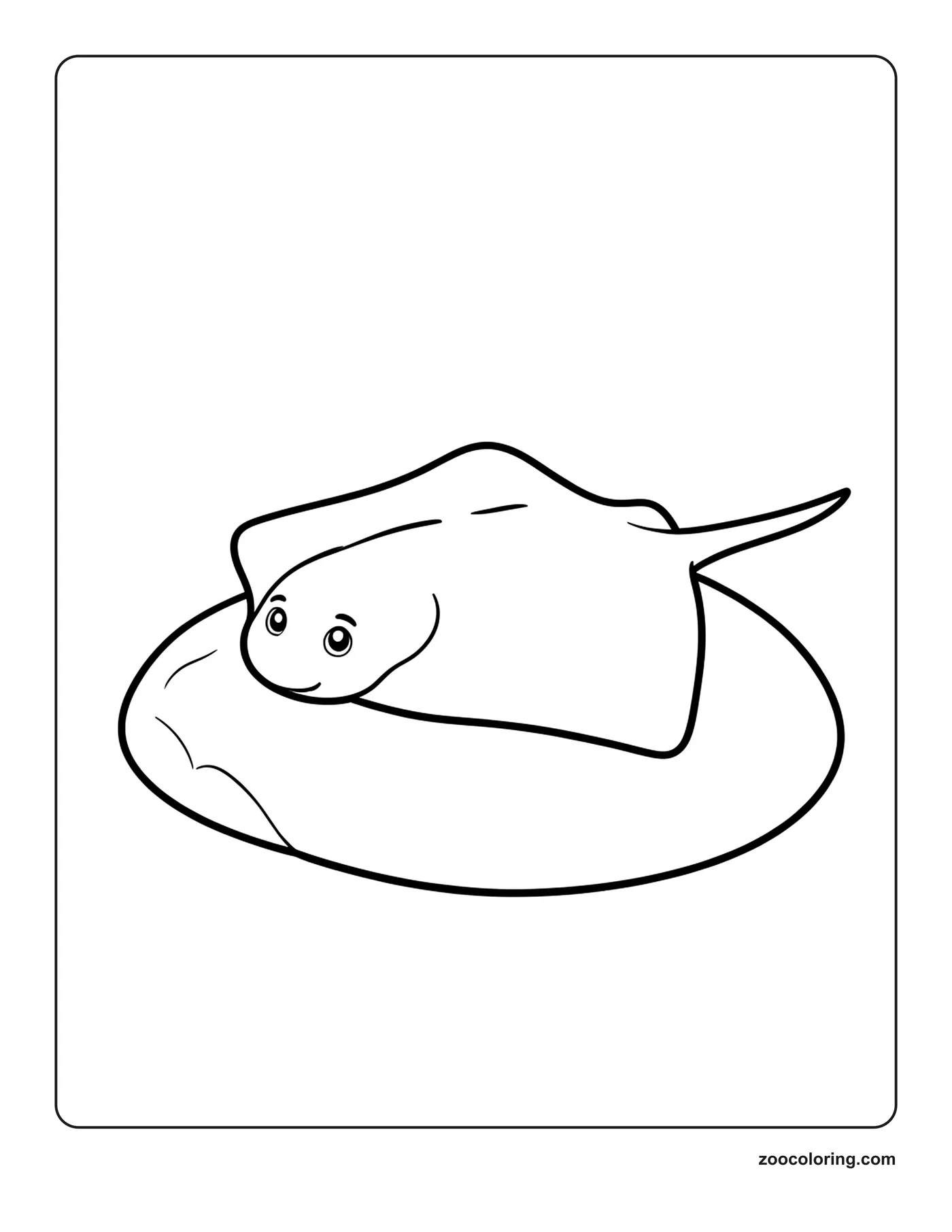
A Stingray Resting on a Flat Rock
A ray lies flat on top of one smooth, wide rock.
Download PDF -
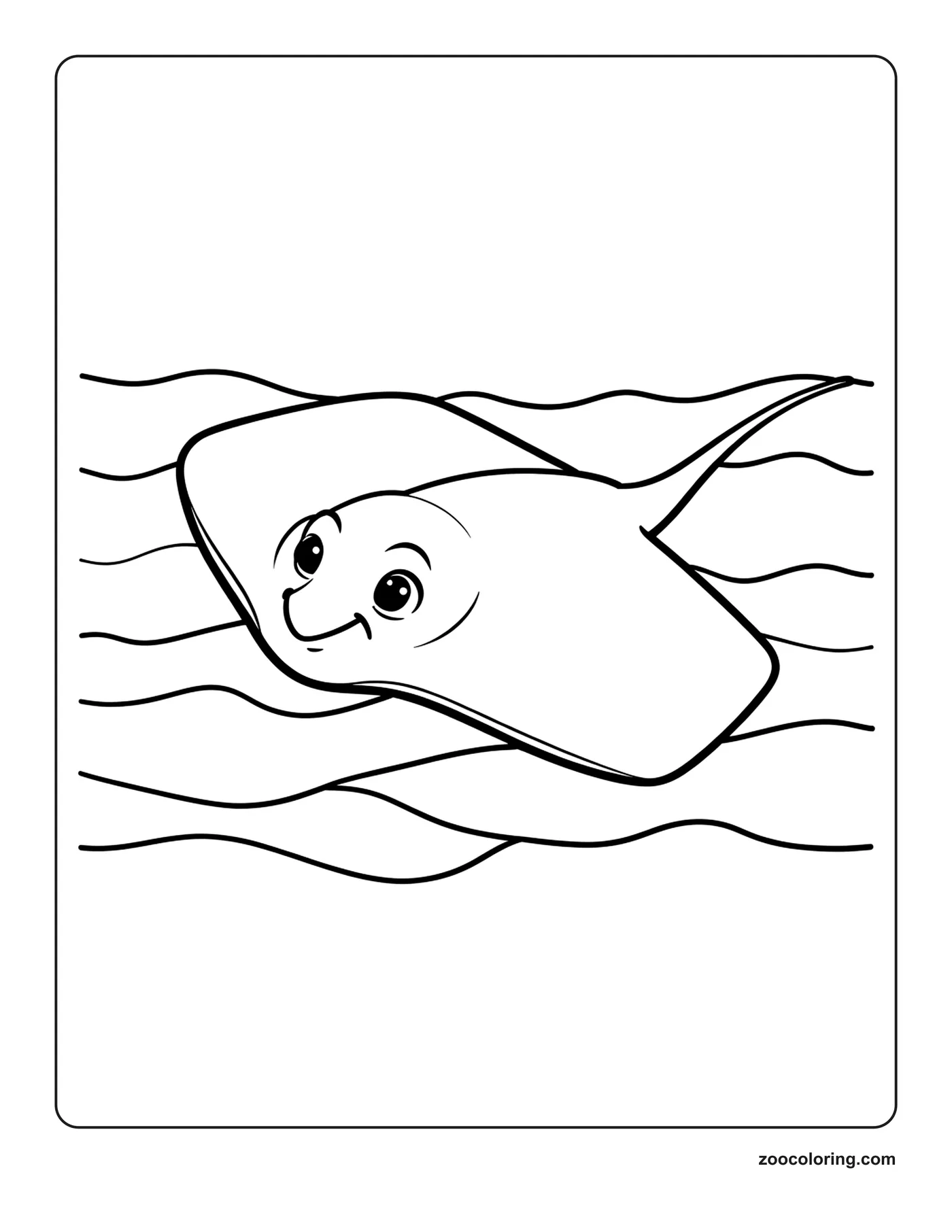
A Stingray Swimming Over Sand Ripples
A ray glides above a few wavy lines of rippled sand.
Download PDF -
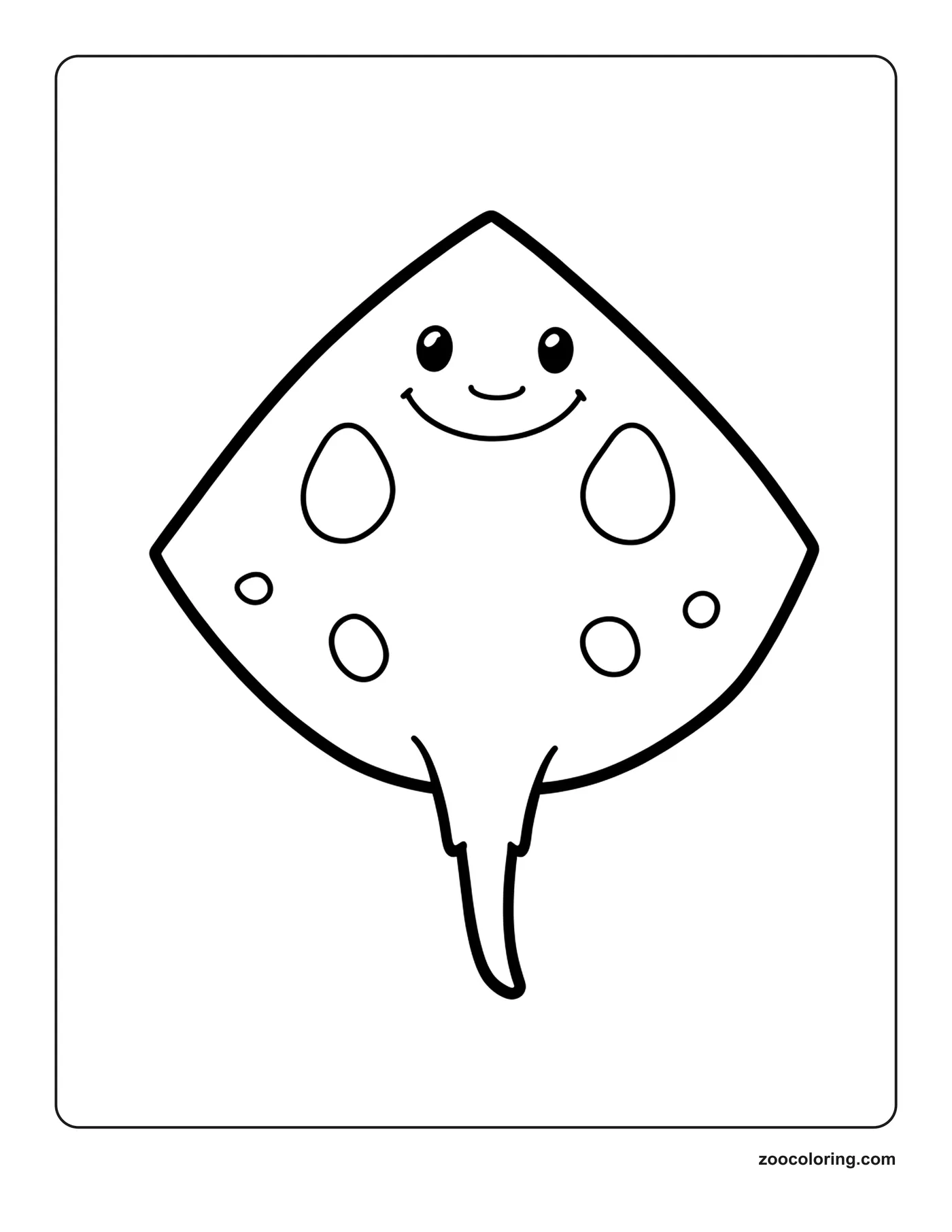
A Round Stingray Outline With Spots
A simple round-bodied ray with a few large spots along its back.
Download PDF -
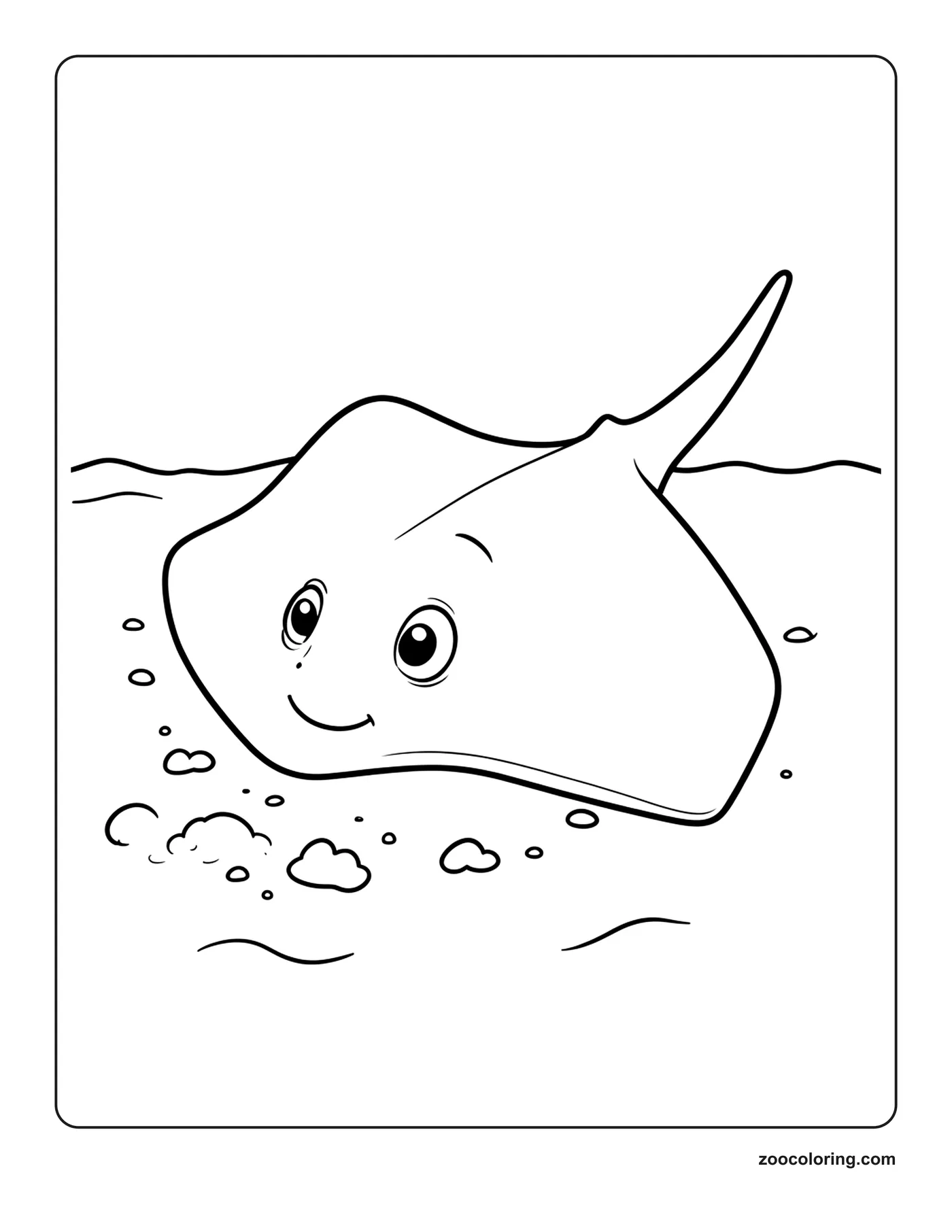
A Stingray Uncovering Food in the Sand
A ray flaps its fins to stir up sand and find hidden prey.
Download PDF -
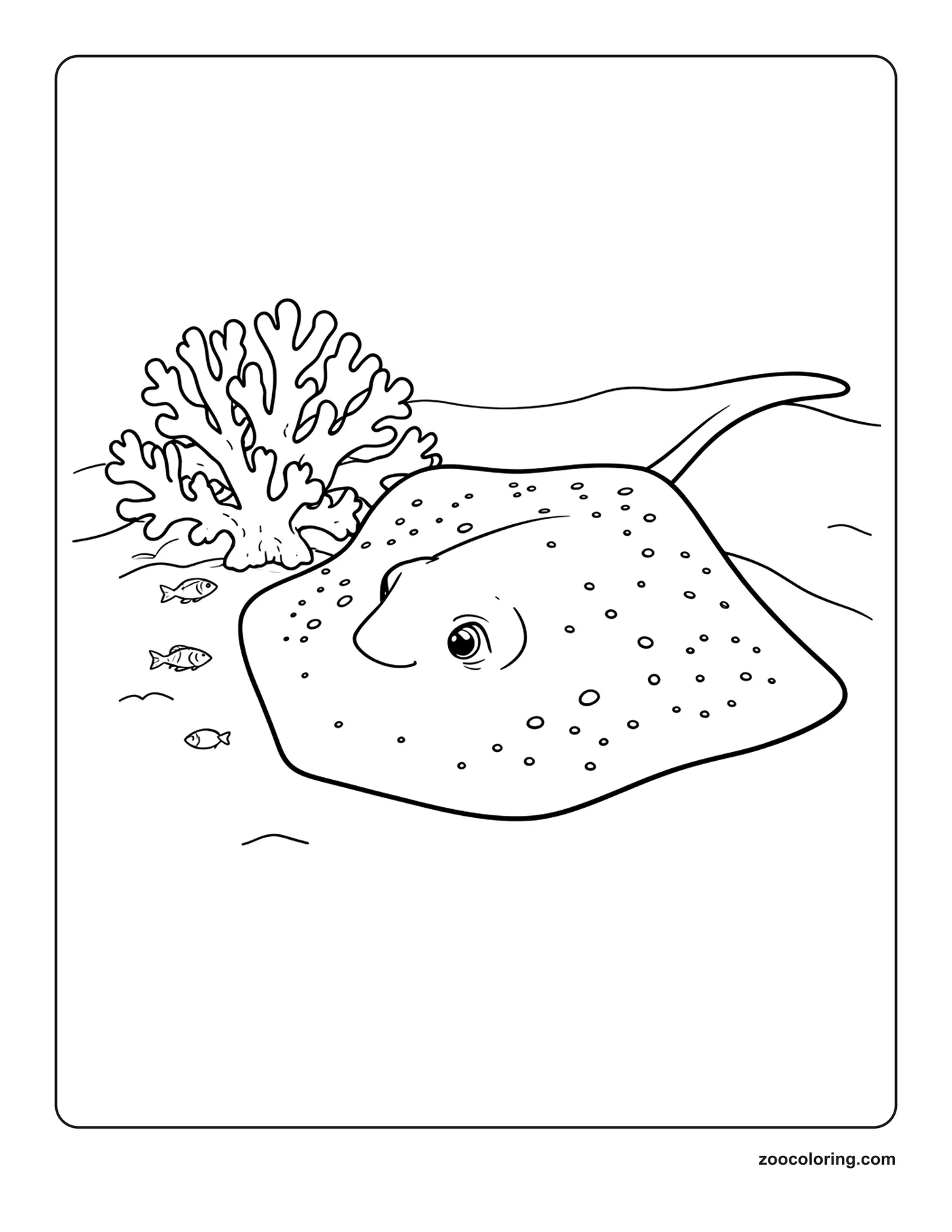
A Blue-Spotted Stingray Near Coral
A spotted ray rests beside a coral head with a few small fish.
Download PDF -
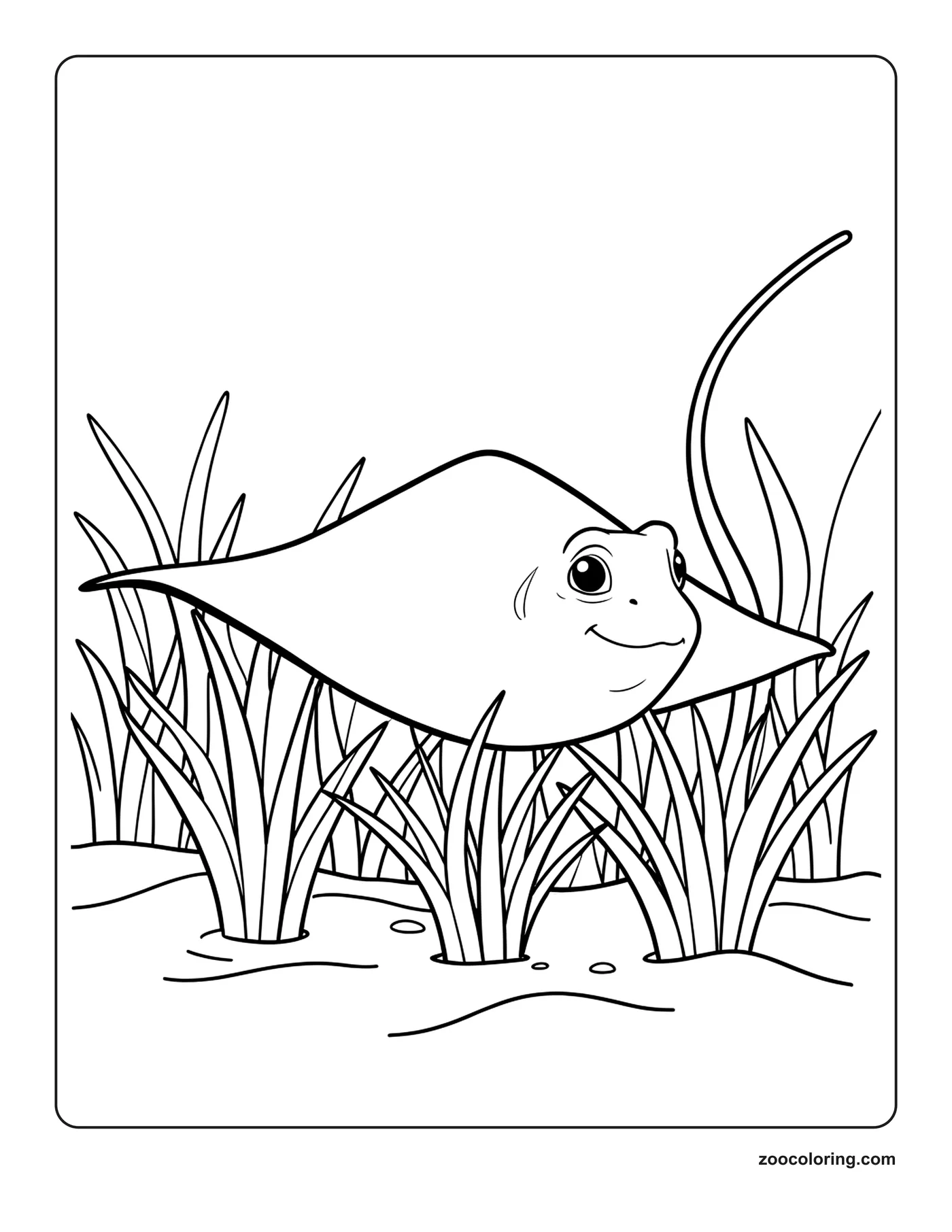
A Stingray Over a Seagrass Bed
A ray glides above long, swaying blades of seagrass.
Download PDF -
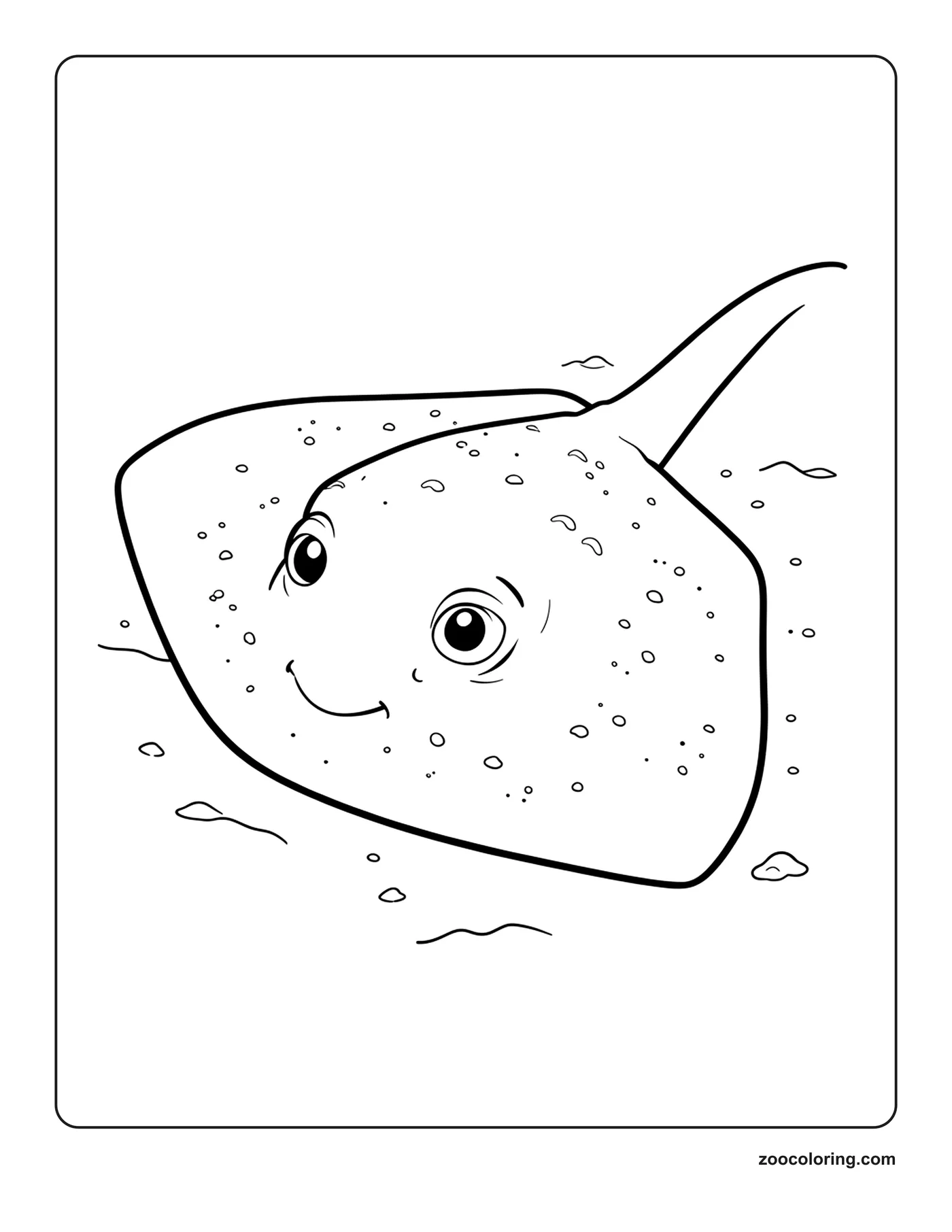
A Stingray Buried With Only Its Eyes Showing
Sand covers a ray's disc, with eyes, spiracles and tail peeking out.
Download PDF -
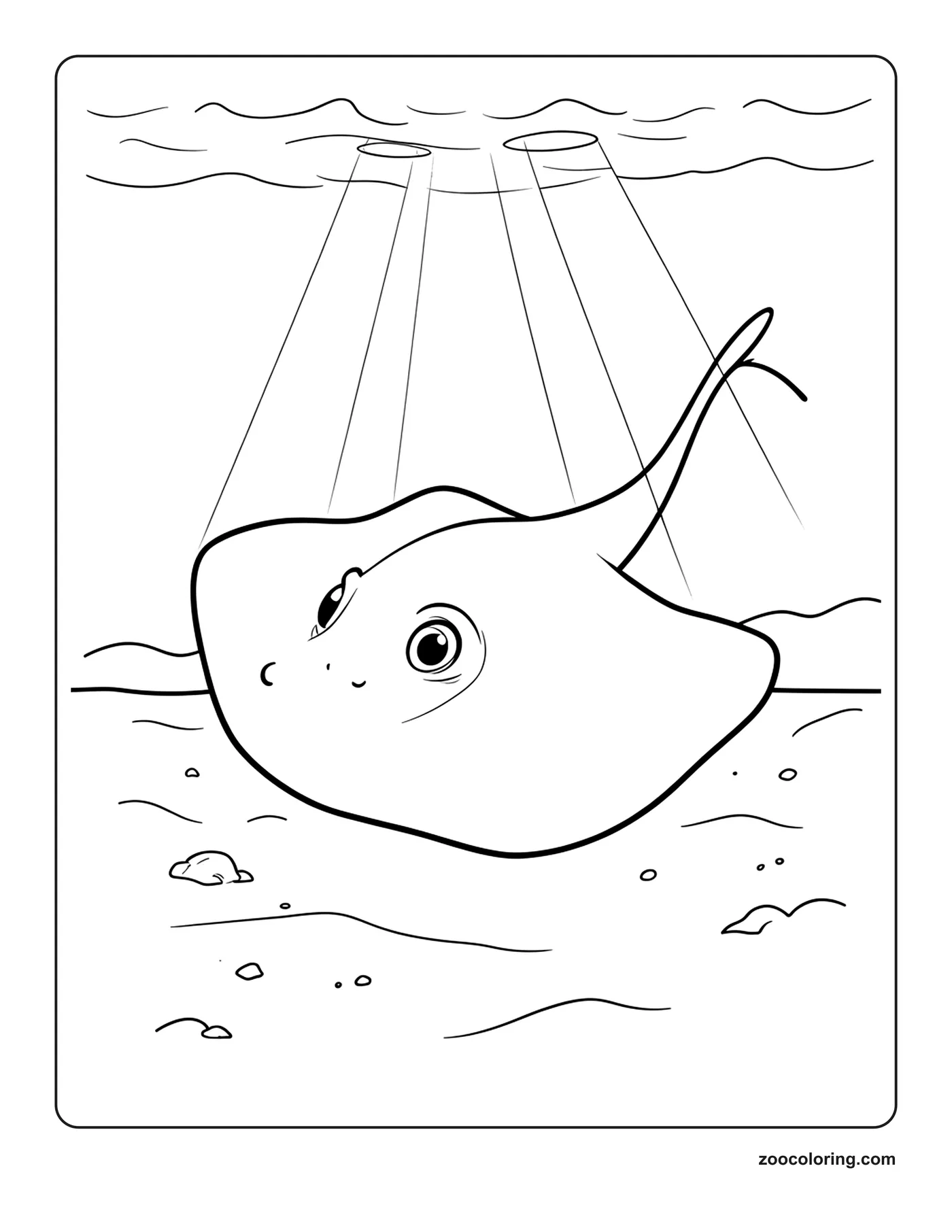
A Stingray Under Sun Rays
Light beams shine down through the water onto a gliding ray.
Download PDF -
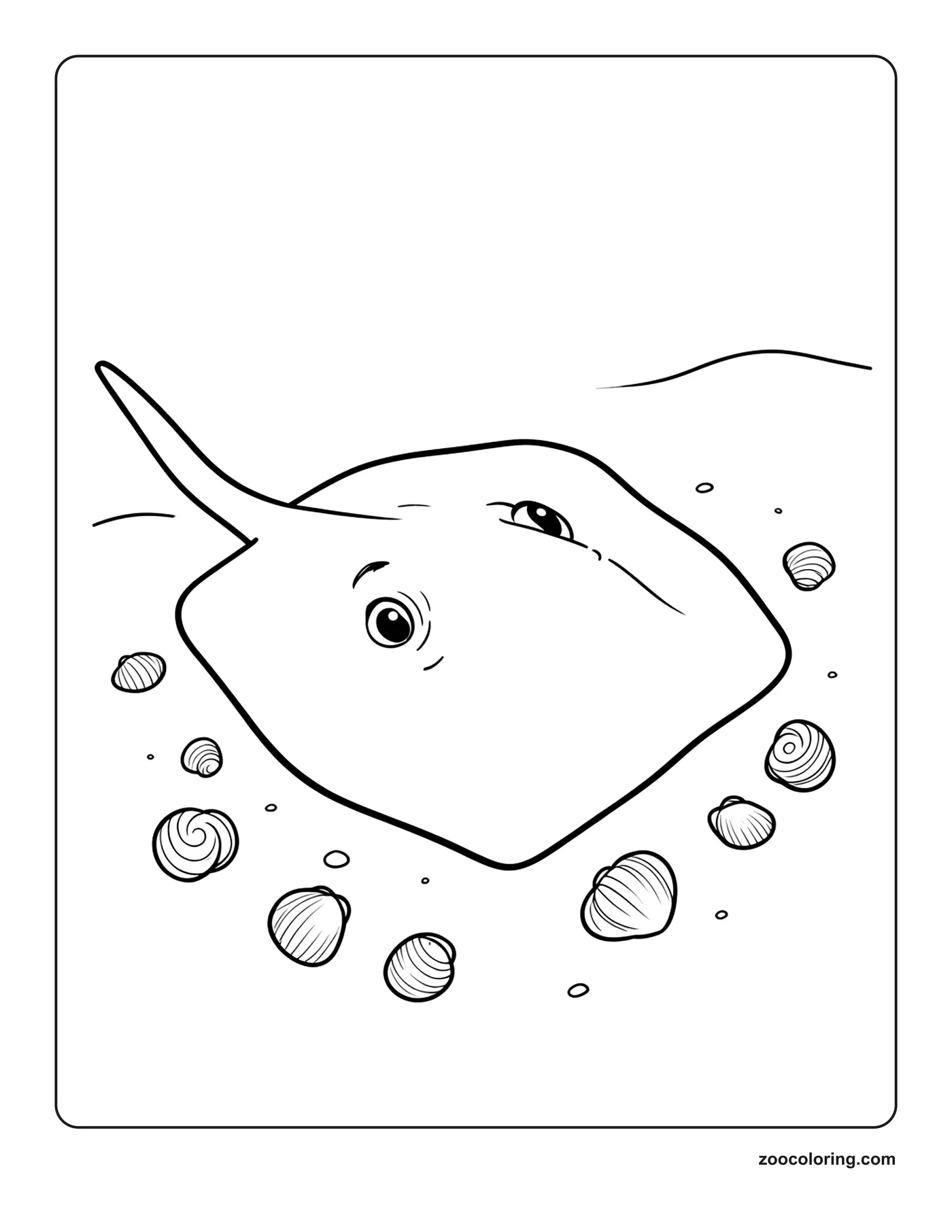
A Stingray Near Seashells
A ray rests on sand scattered with spiral shells and clam shells.
Download PDF -
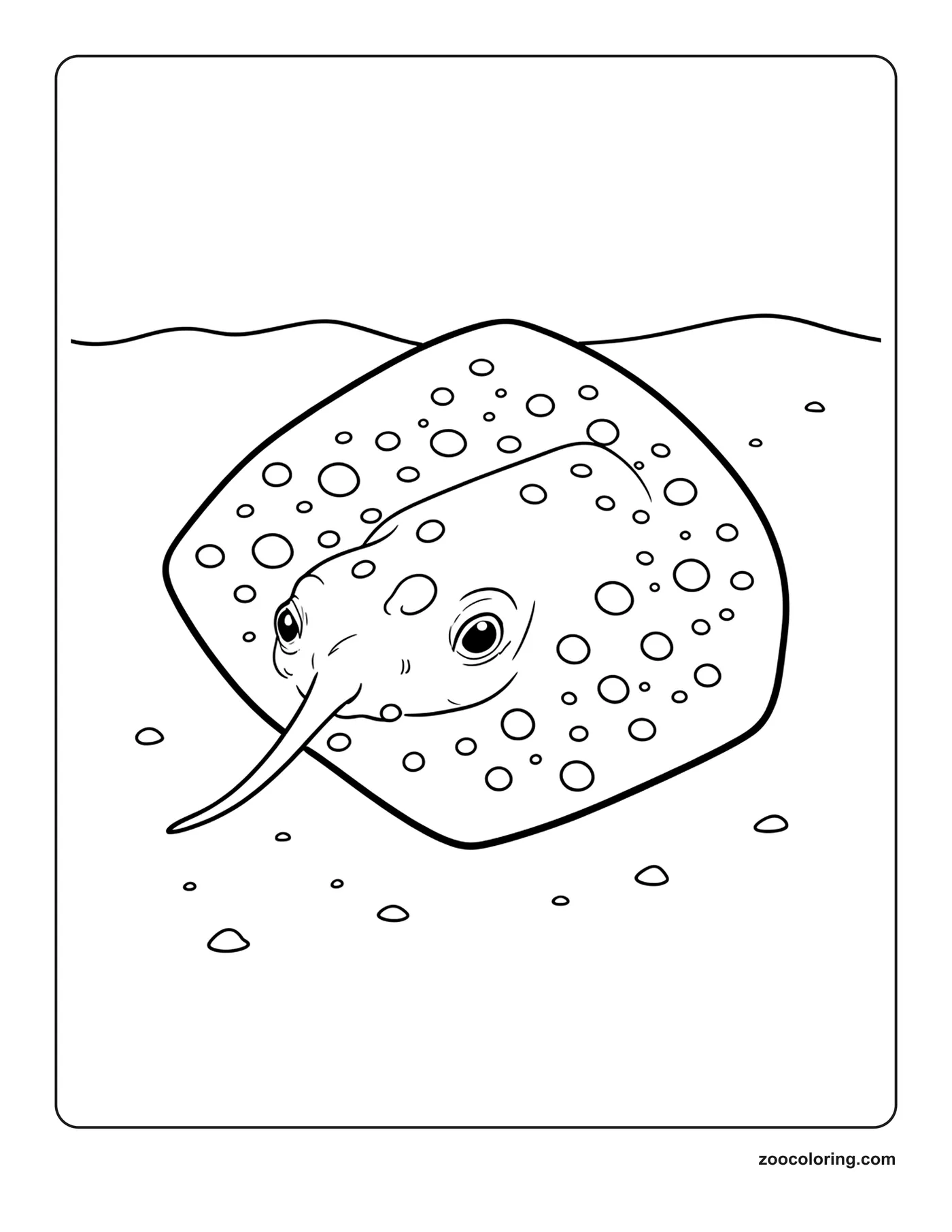
A Stingray Pattern Close-Up
A patch of blue-spotted skin with dozens of round spots to fill.
Download PDF -
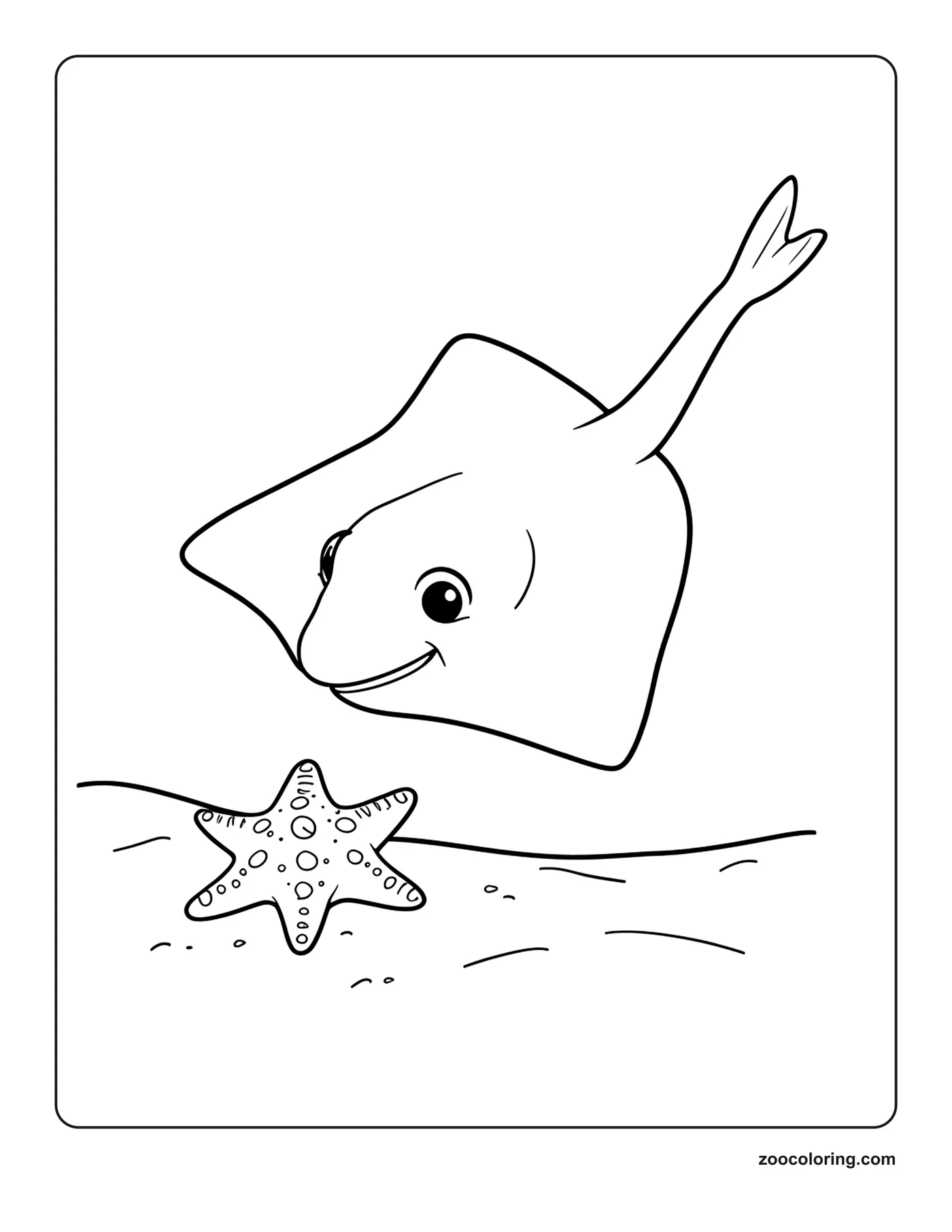
A Stingray Gliding Past a Sea Star
A ray swims over a sea star resting on the sandy bottom.
Download PDF -
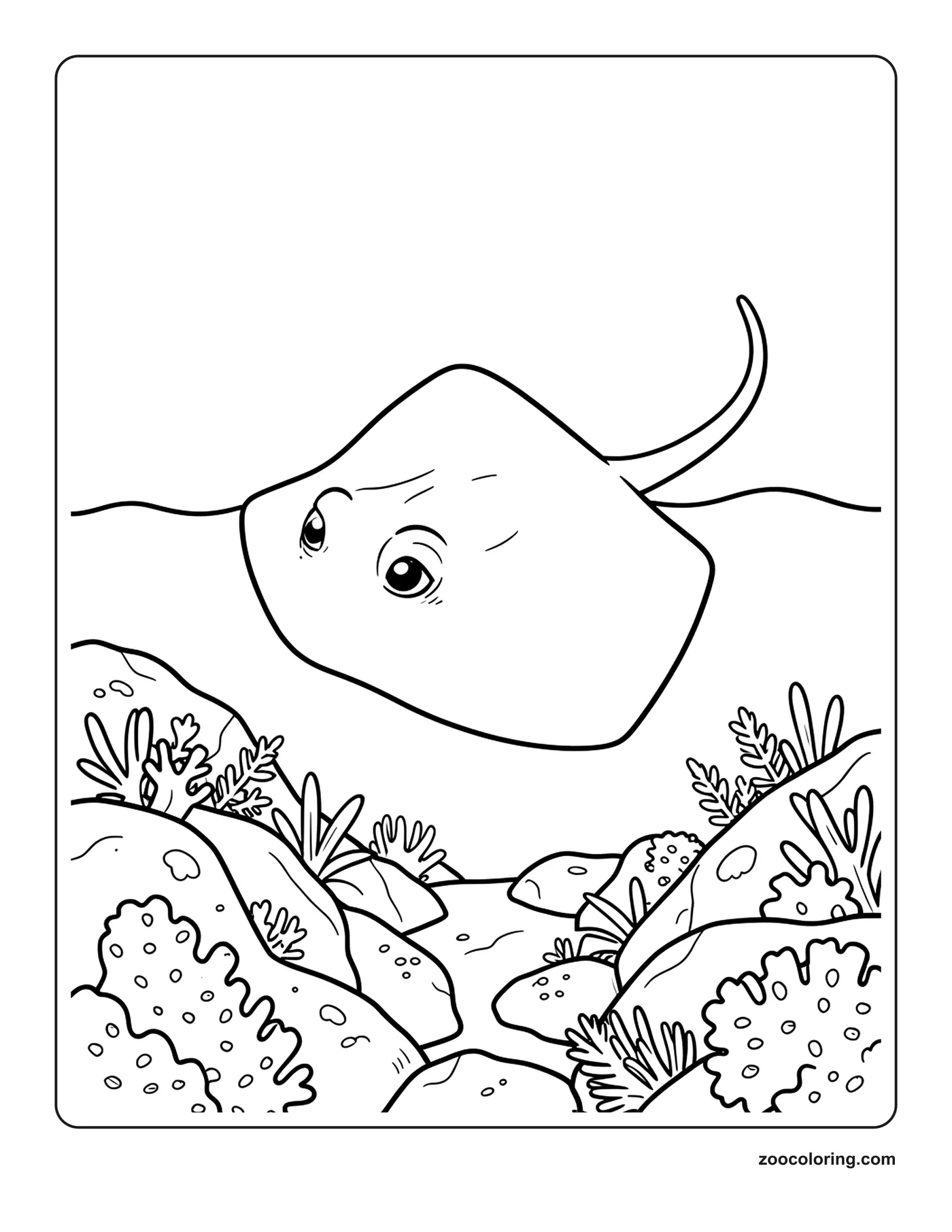
A Stingray Over a Rocky Reef
A ray glides above rocks covered in sponges and small plants.
Download PDF -
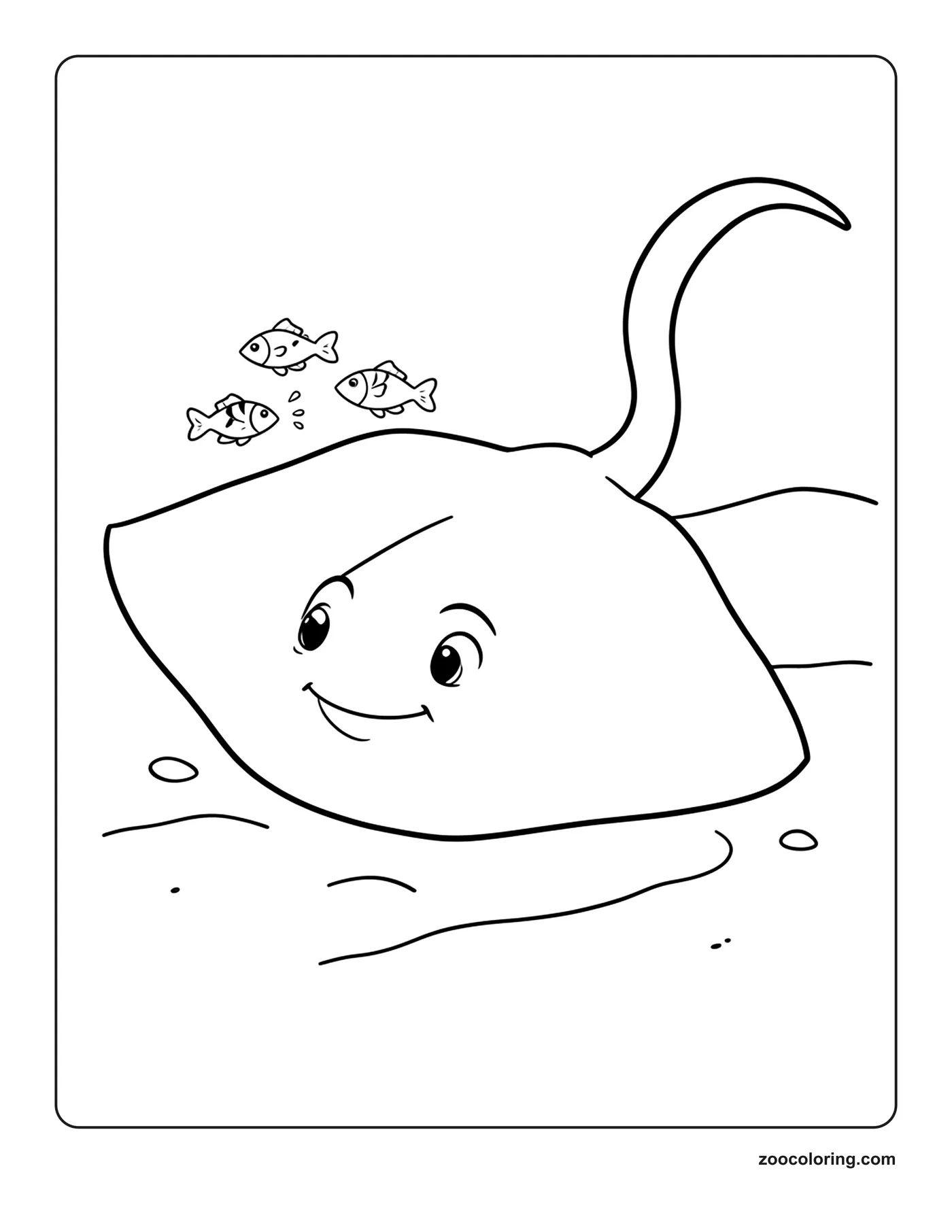
A Stingray With Small Fish Following
A few small fish swim behind a ray, hoping for stirred-up food.
Download PDF -
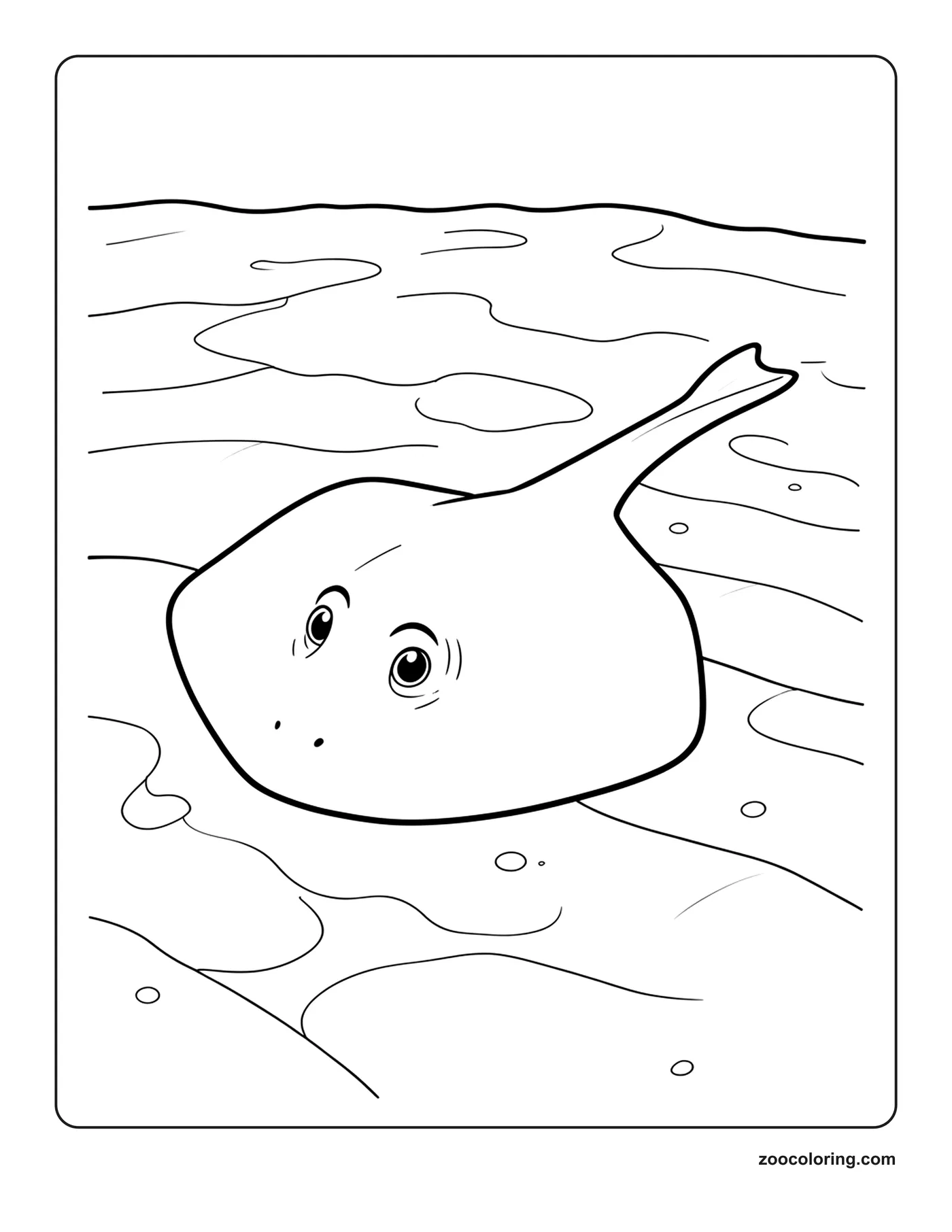
A Stingray Resting in Shallow Water
A ray lies in clear shallow water with light patterns on the sand.
Download PDF -
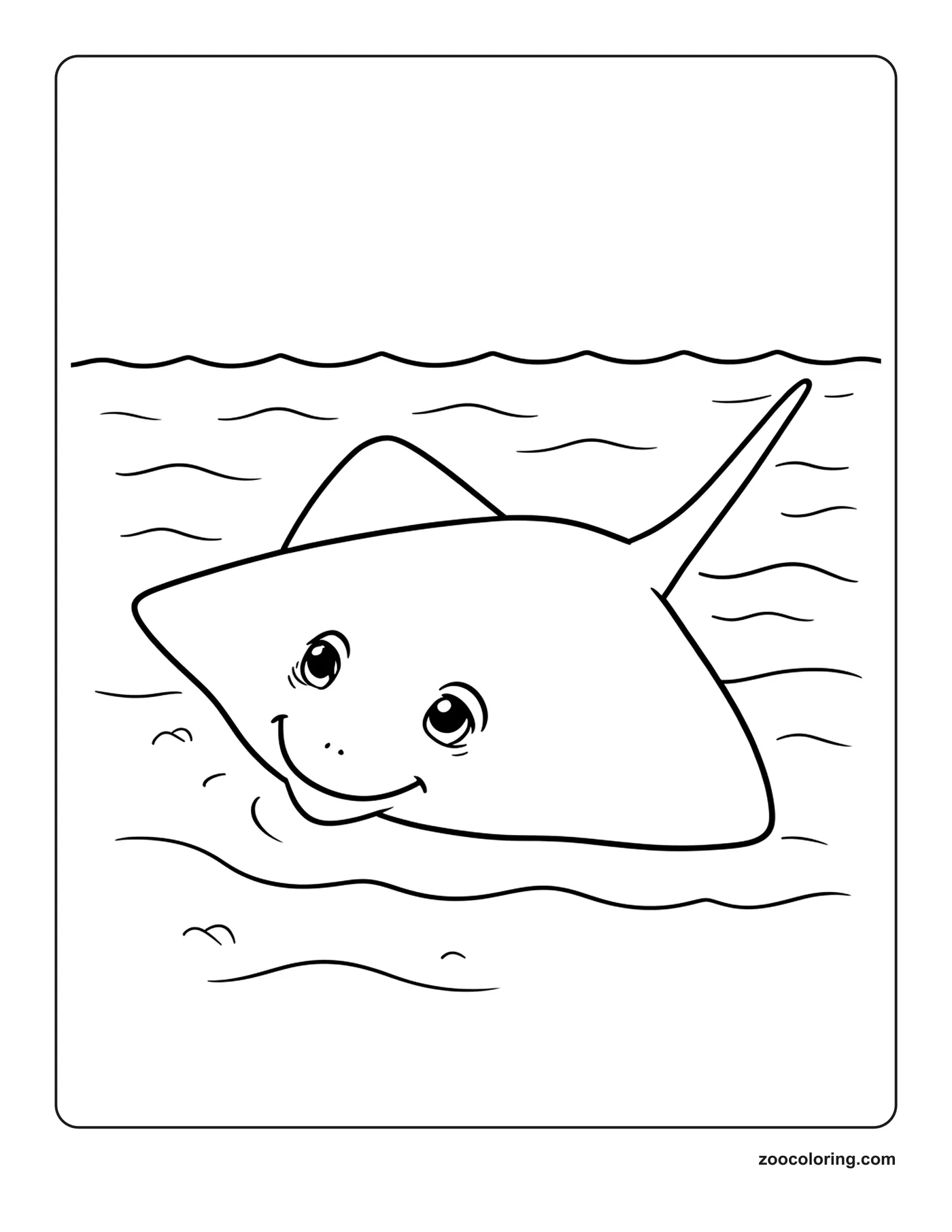
A Stingray Swimming Near the Surface
A ray glides just under the wavy surface of the sea.
Download PDF -
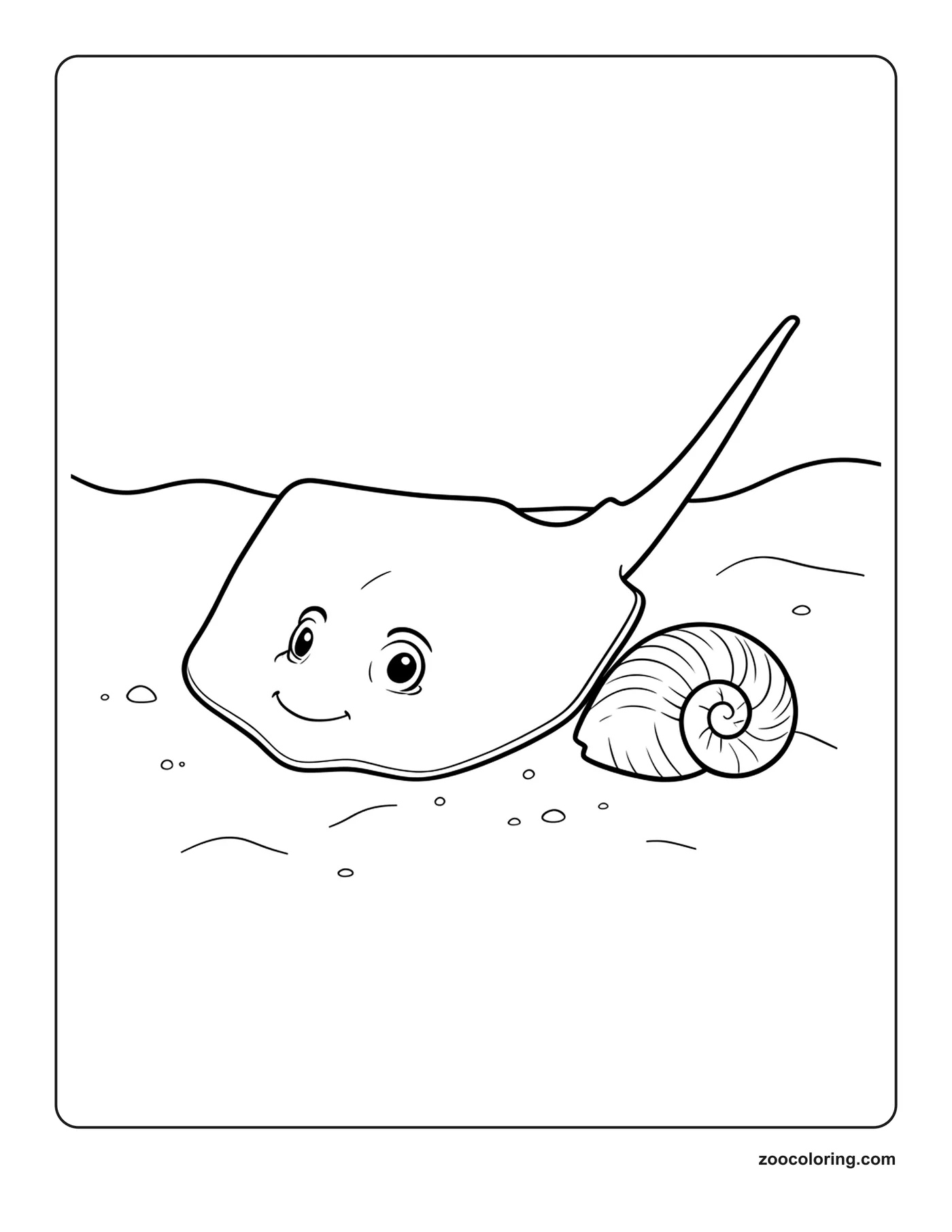
A Stingray Resting Beside a Conch Shell
A ray settles on the sand next to a large spiral conch shell.
Download PDF -
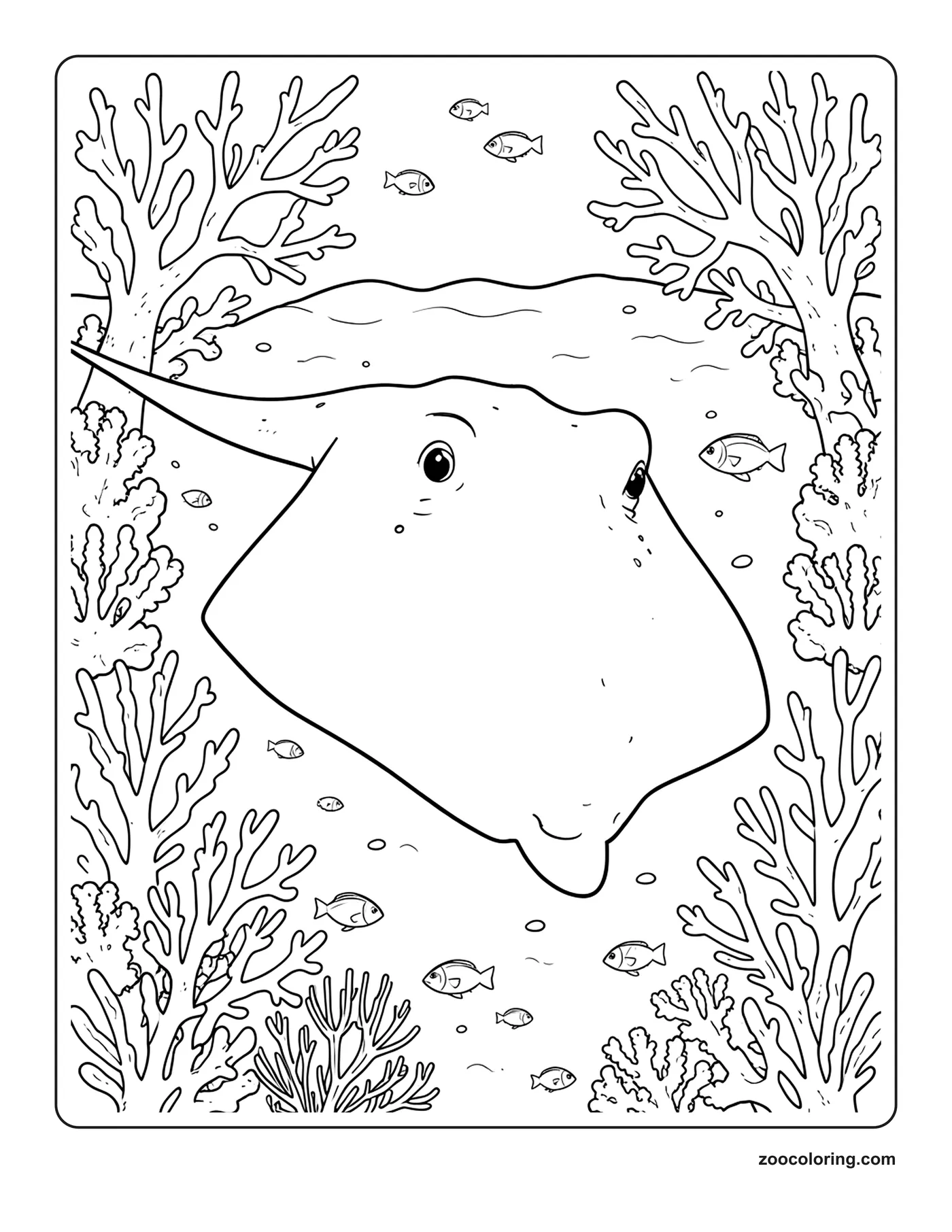
A Stingray Over a Colorful Coral Reef
A ray glides above branching coral, sea fans and many small fish.
Download PDF -
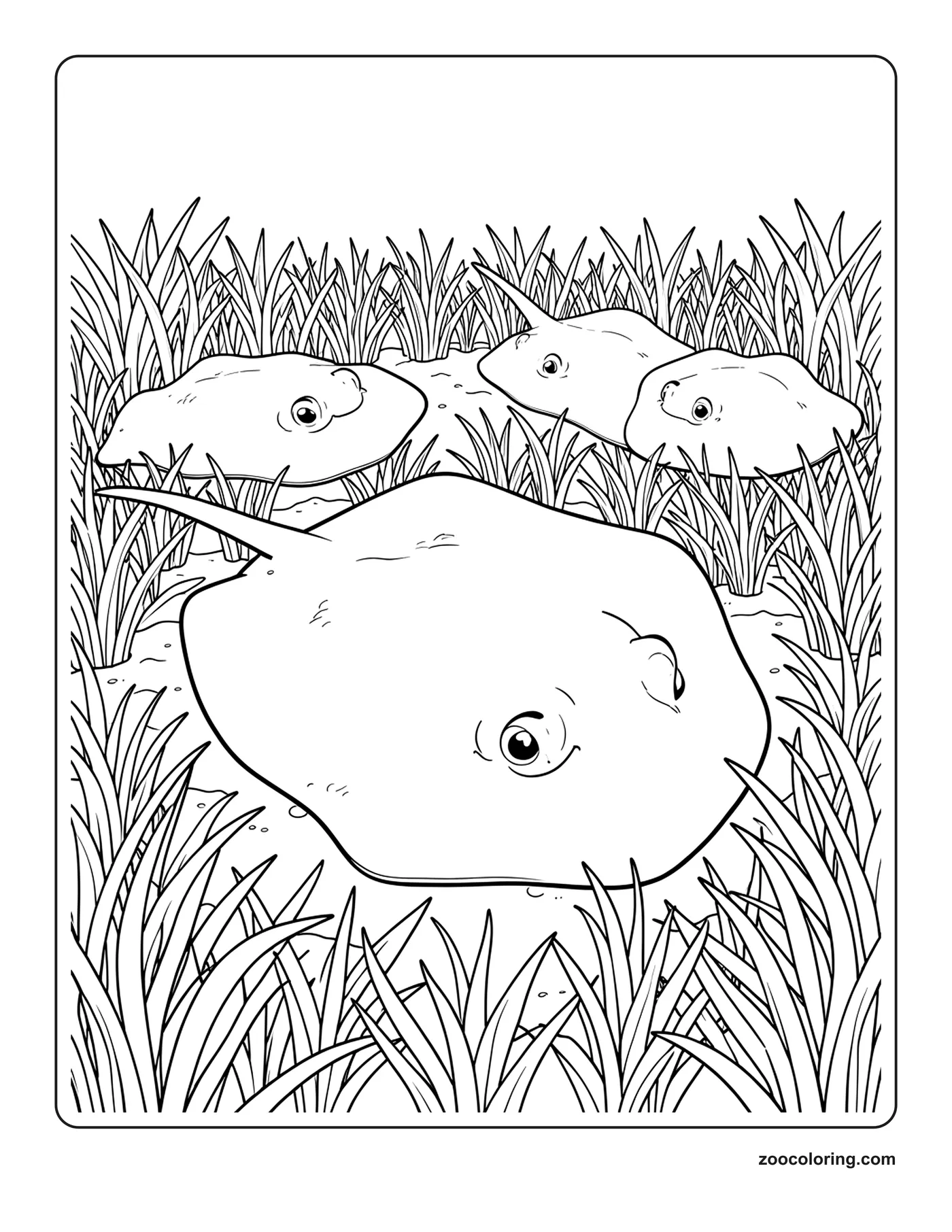
A Group of Stingrays Over Seagrass
Several rays glide in a loose group over a thick seagrass meadow.
Download PDF -
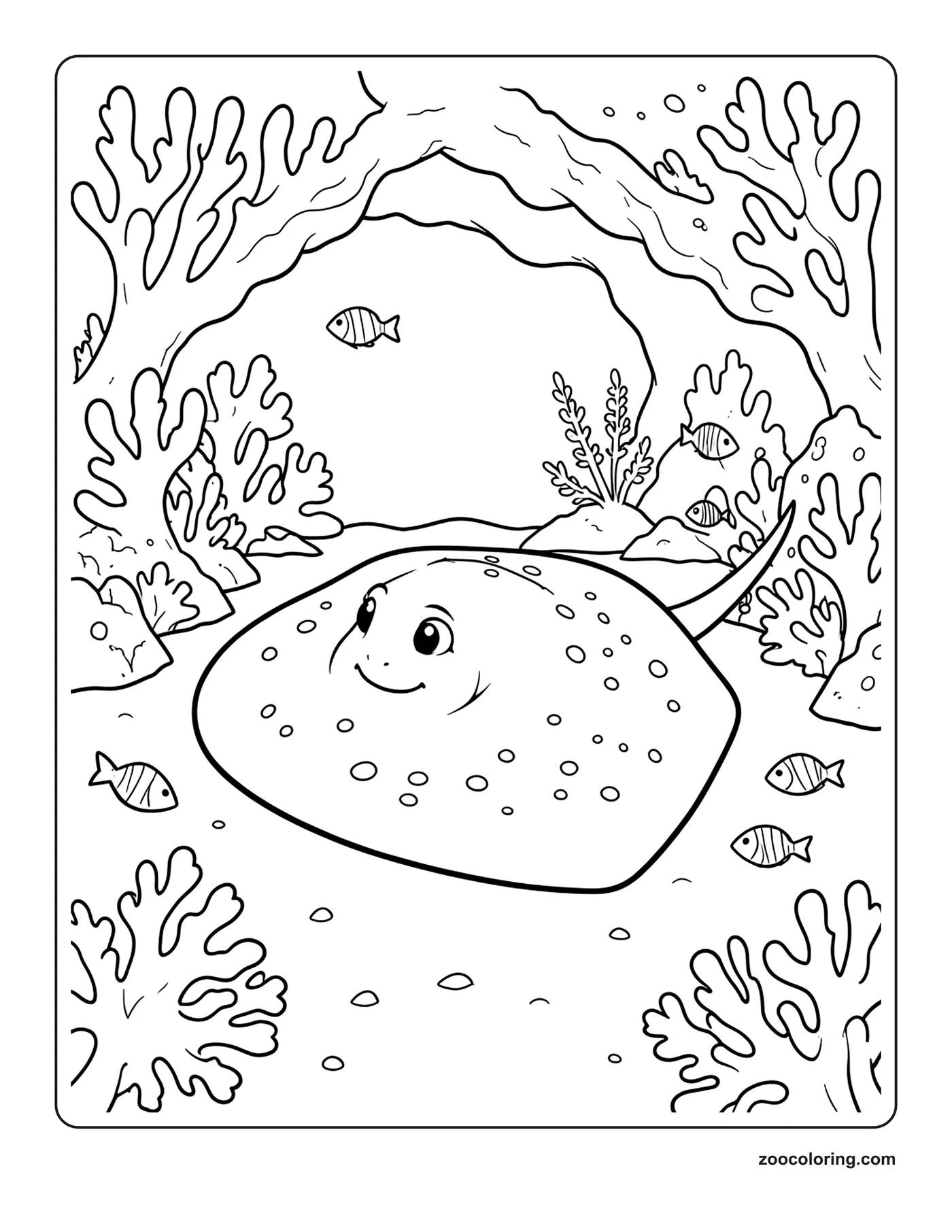
A Blue-Spotted Stingray Under a Coral Ledge
A spotted ray hides beneath a coral overhang with fish around it.
Download PDF -
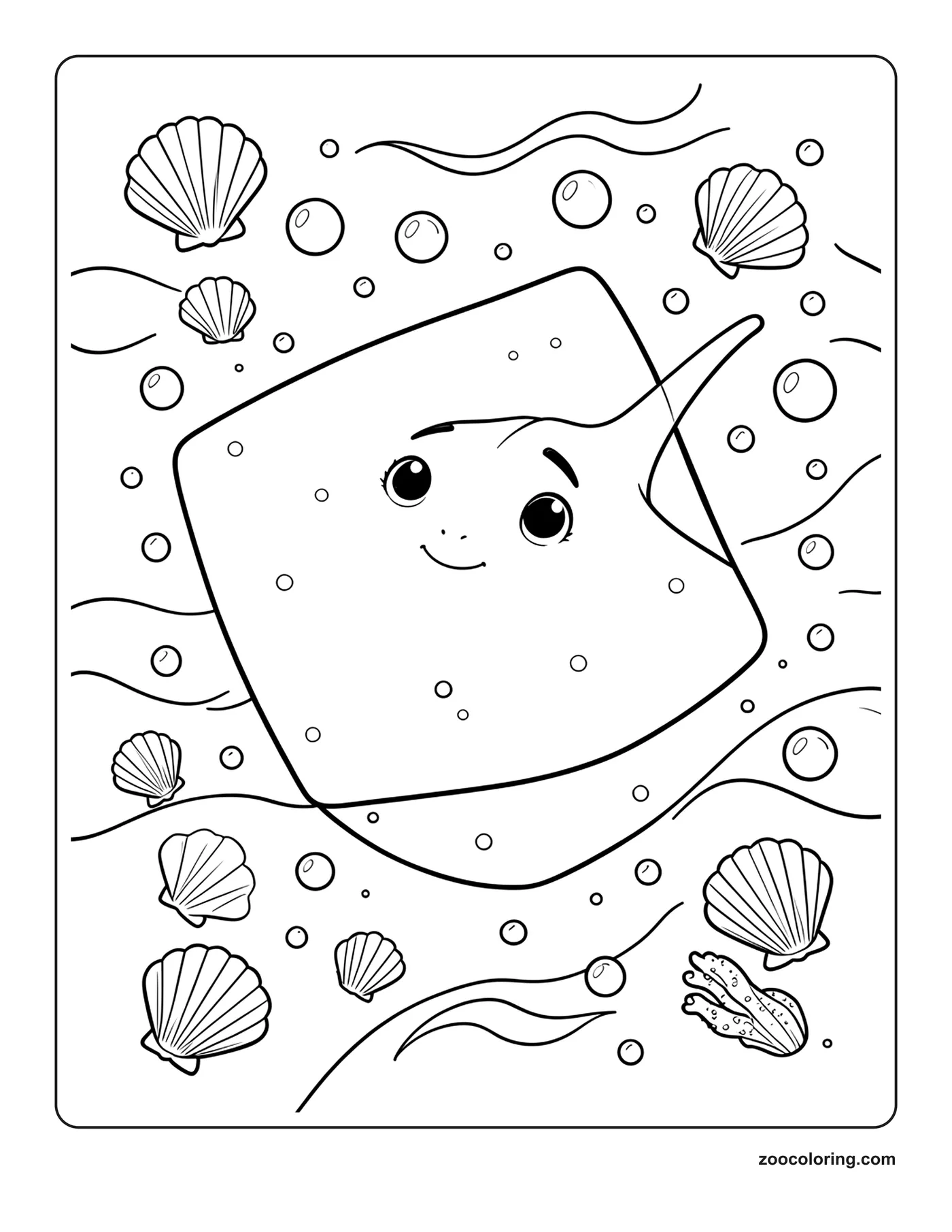
A Stingray Pattern Page With Shells and Bubbles
Shells, bubbles and waves fill the page around a ray in the center.
Download PDF -
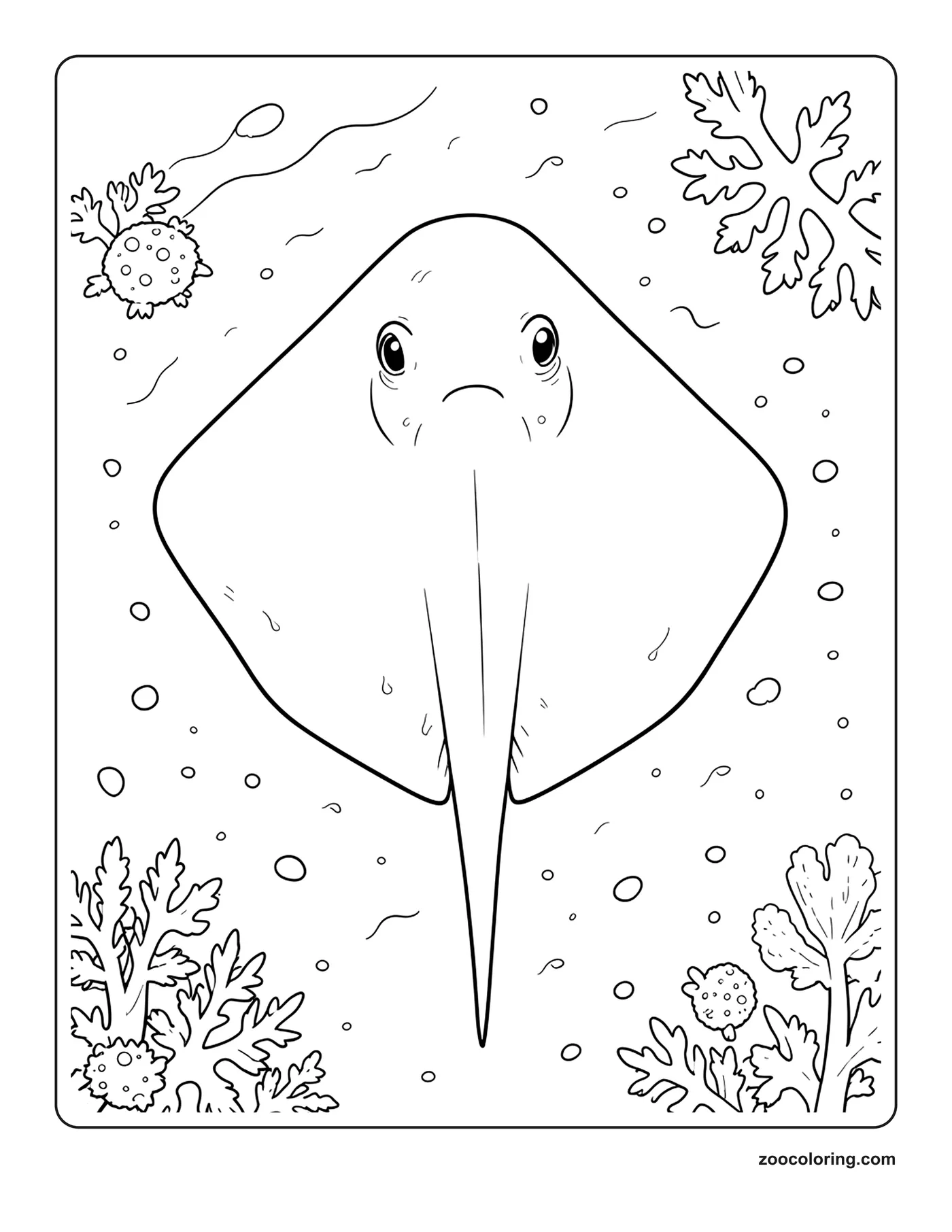
A Realistic Stingray Seen From Above
A detailed ray with skin texture, eyes, spiracles and tail spine.
Download PDF -
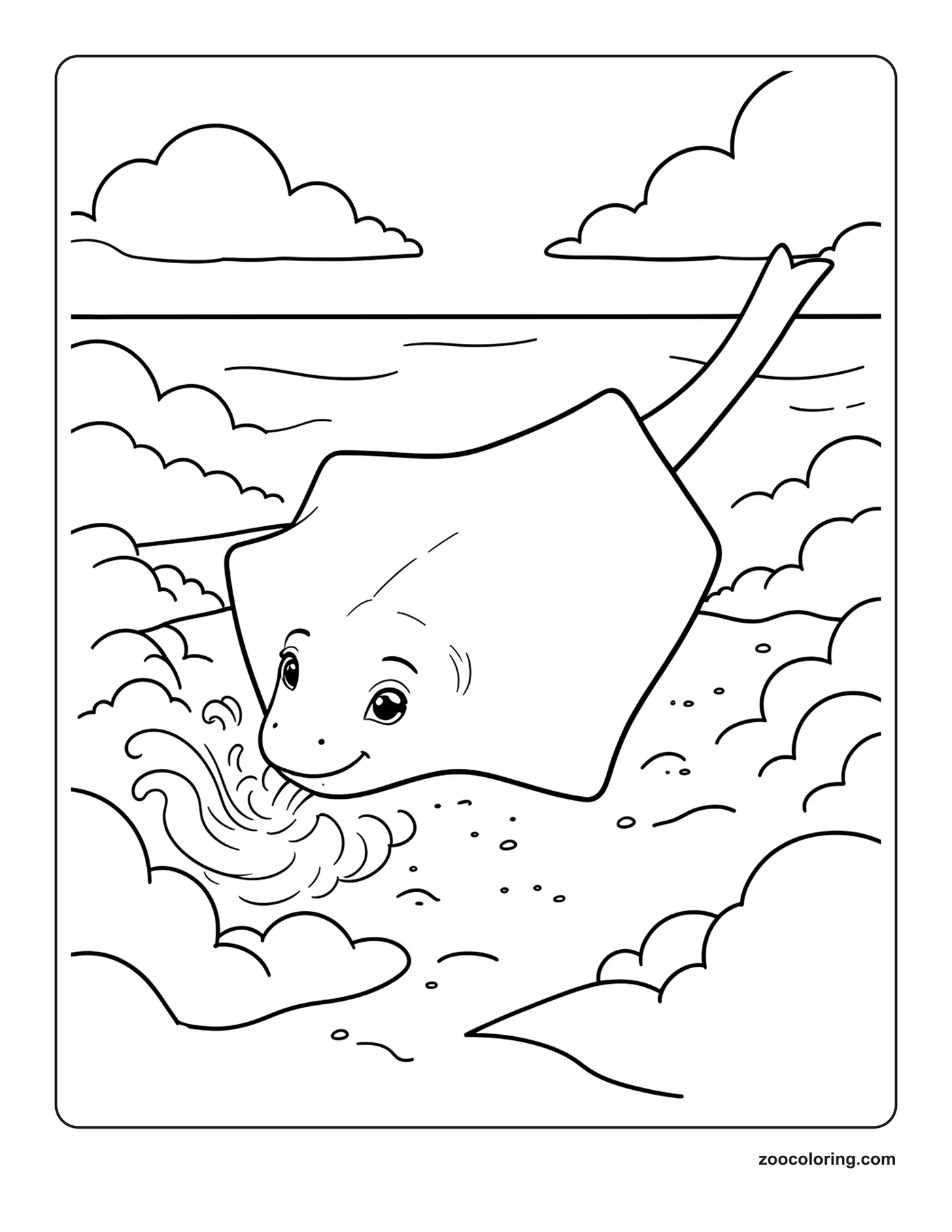
A Stingray Feeding Among Sand Clouds
A ray digs in the sand, sending swirling clouds through the water.
Download PDF -
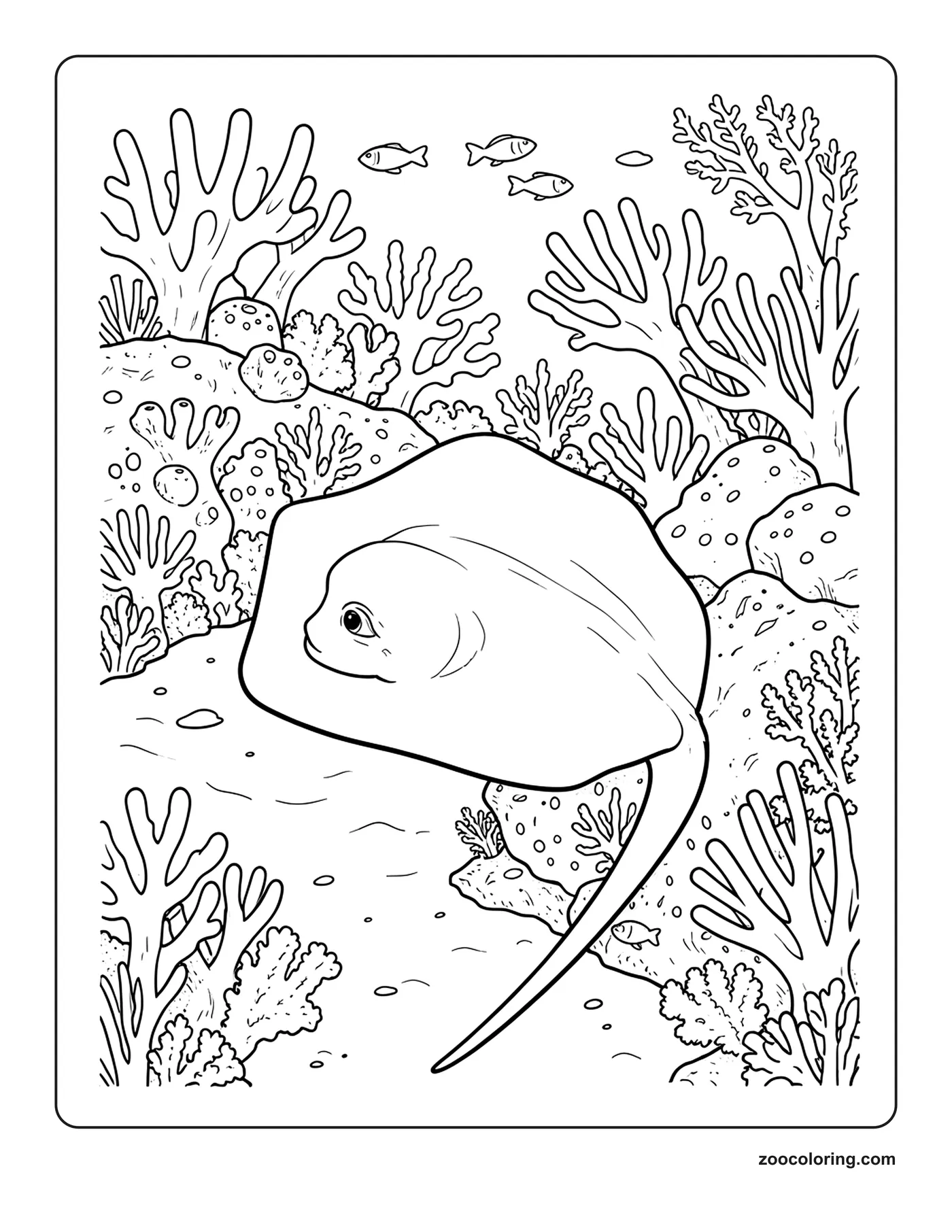
A Stingray Gliding Past a Reef Wall
A ray swims along a reef wall full of sponges, corals and fish.
Download PDF -
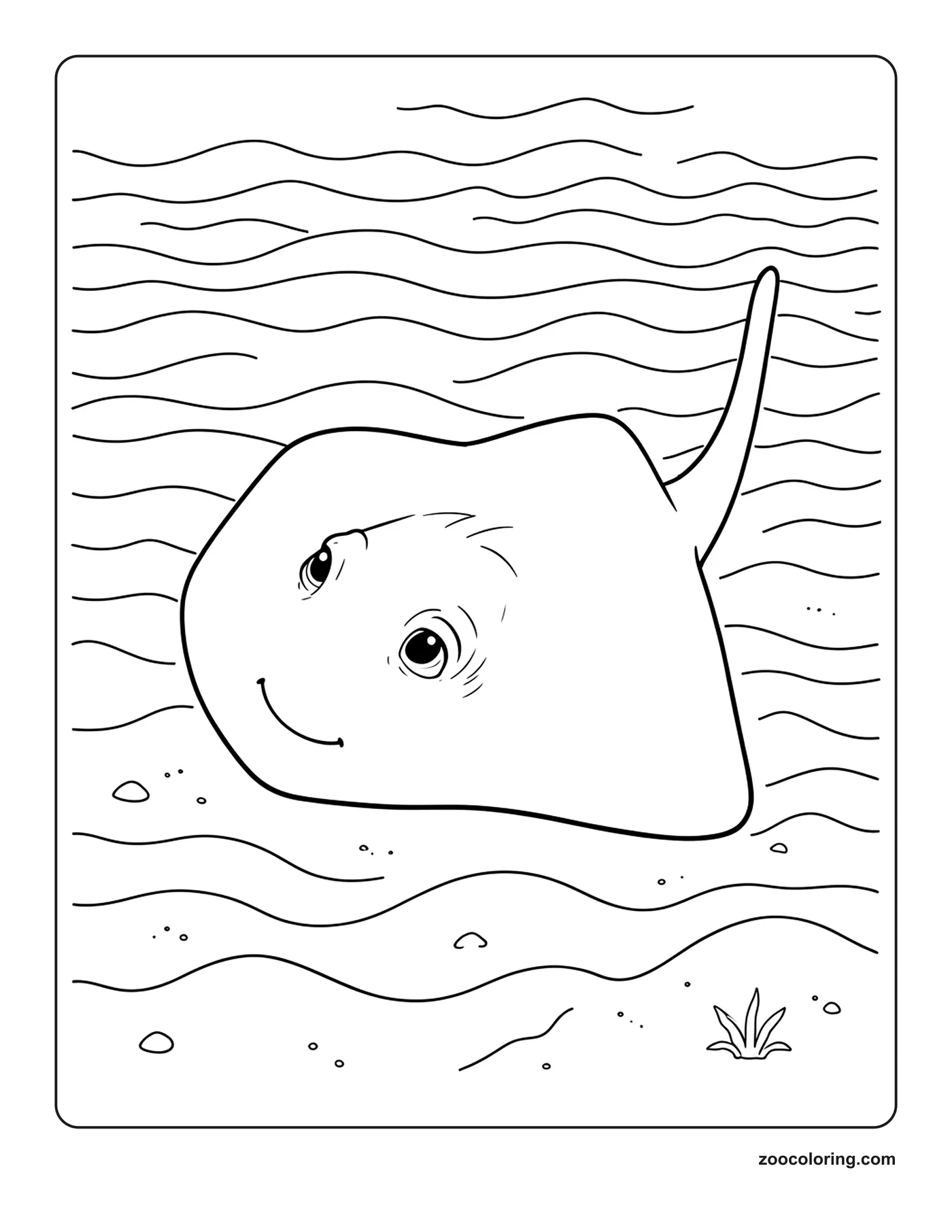
A Stingray Under Rippling Surface Light
Wavy light patterns cover a ray and the sand beneath it.
Download PDF -
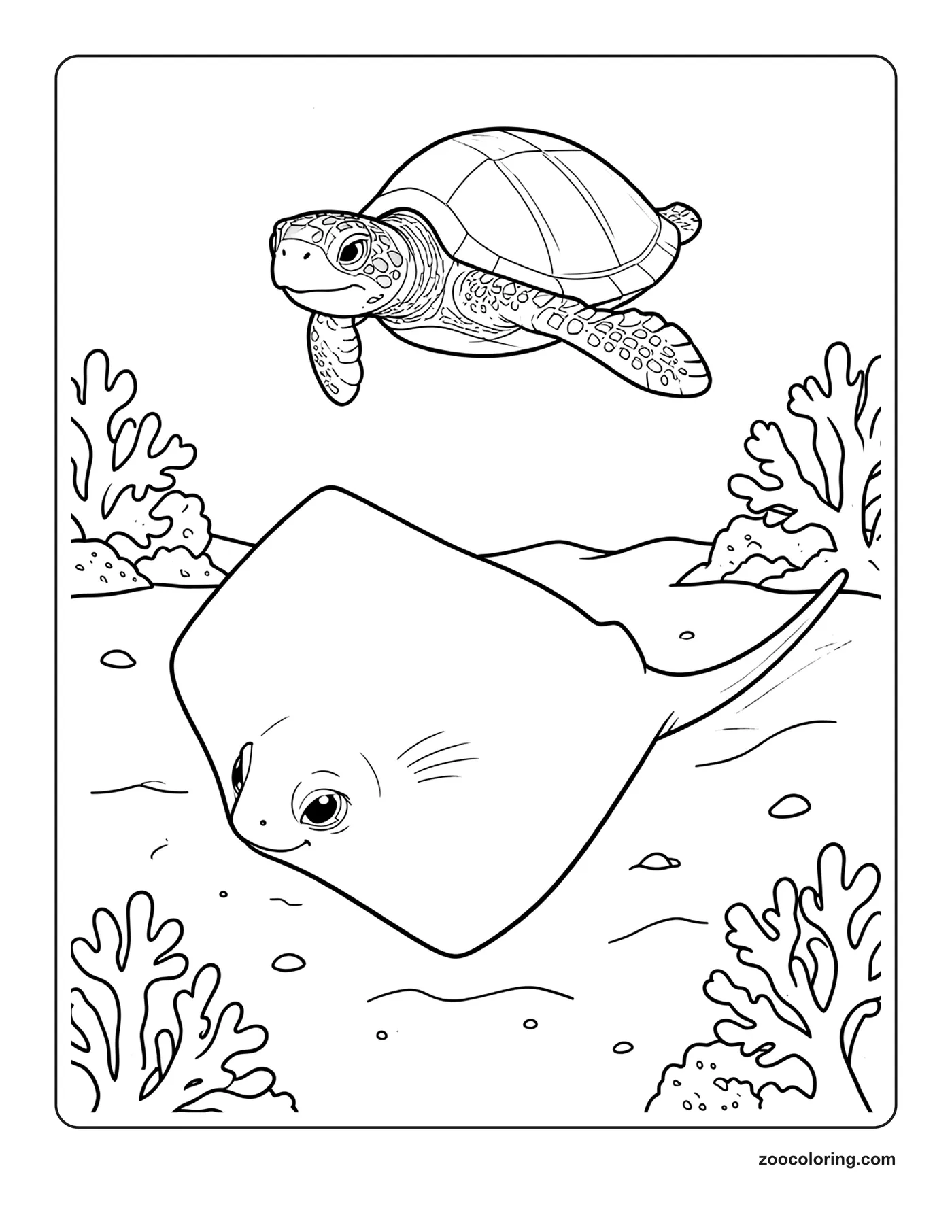
A Stingray With a Sea Turtle Above
A ray glides near the bottom while a sea turtle swims overhead.
Download PDF -
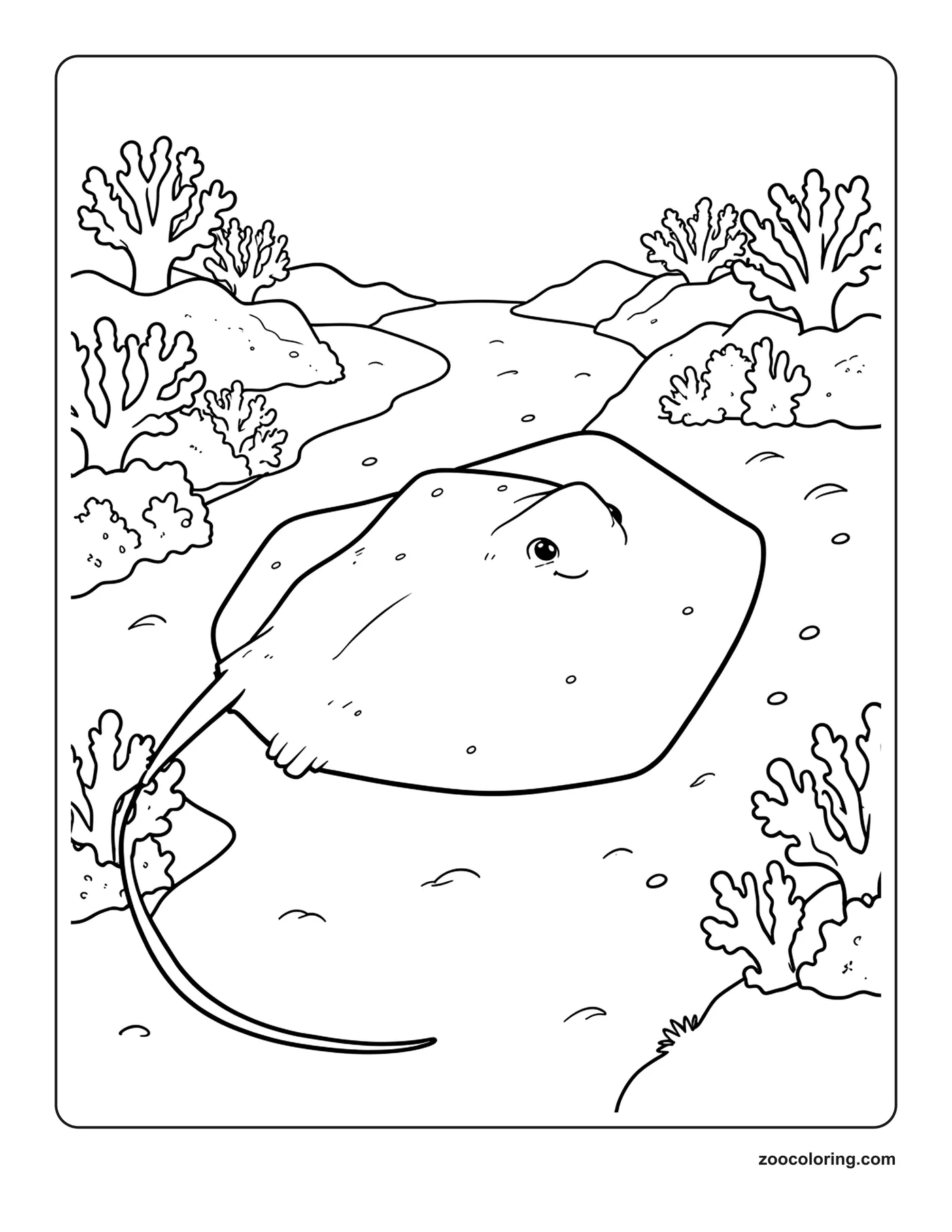
A Stingray in a Sandy Channel Between Reefs
A ray glides along a sandy channel with coral heads rising on both sides.
Download PDF -
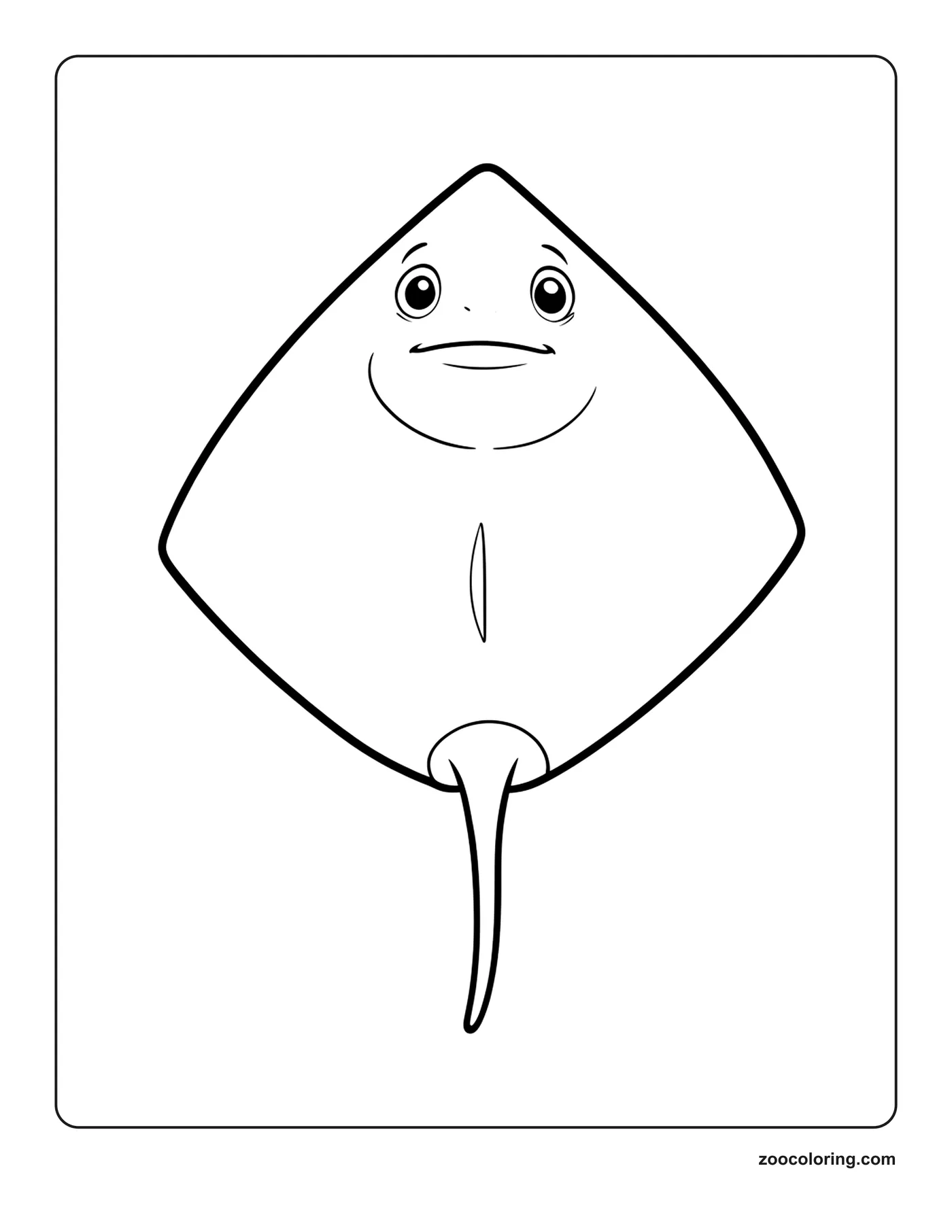
A Stingray Underside View
The pale belly of a ray showing its small mouth and gill slits.
Download PDF -
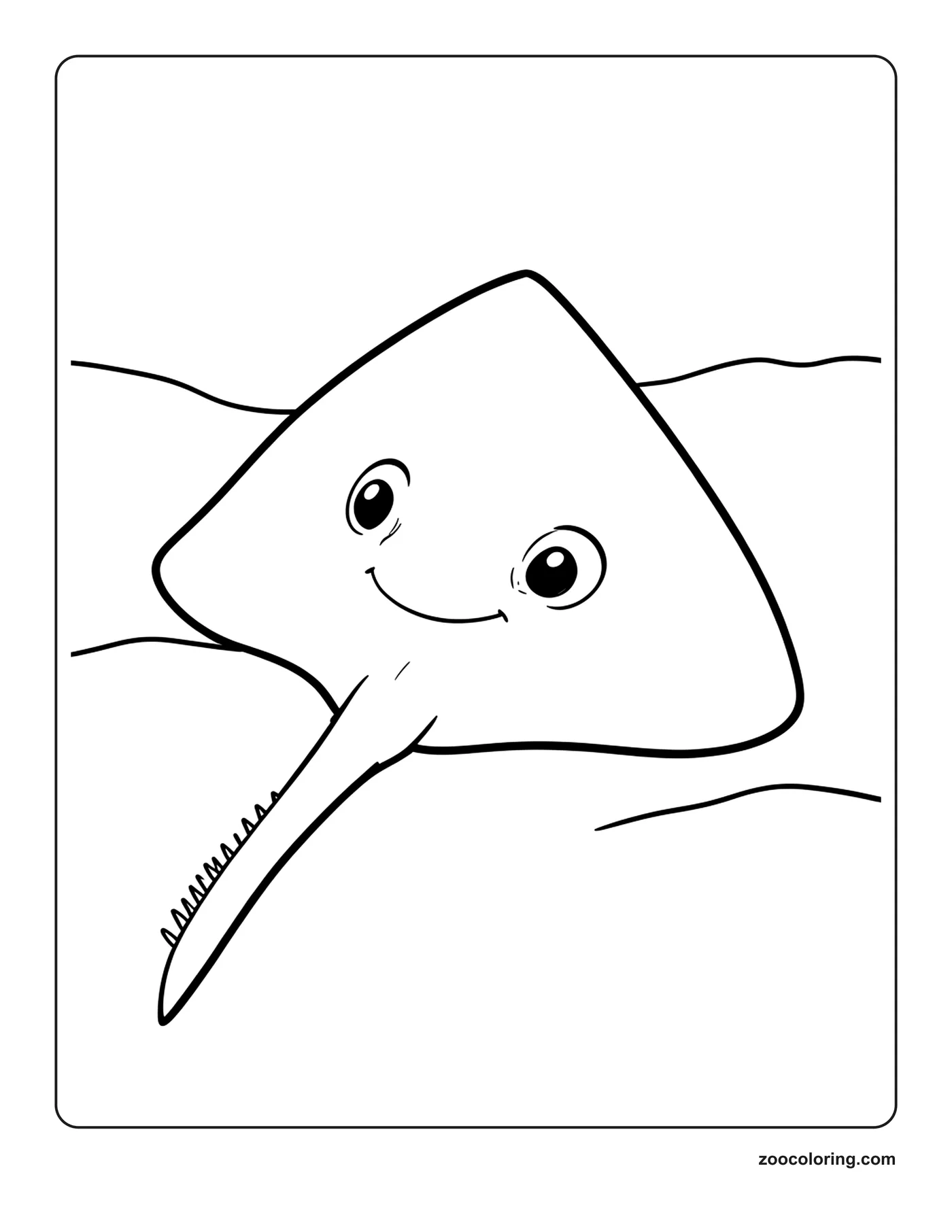
A Stingray Tail and Spine
A long ray tail with its barbed spine drawn large and clear.
Download PDF -
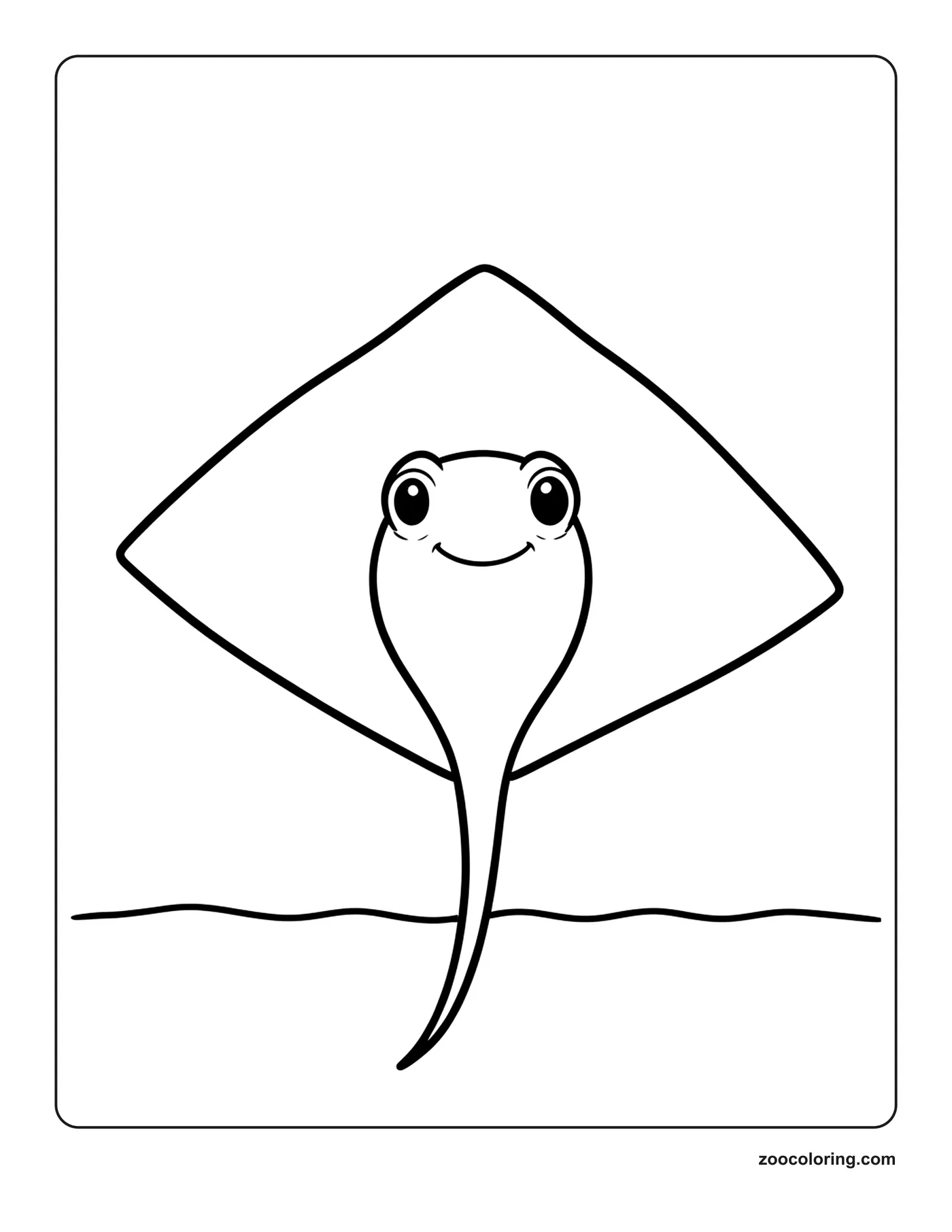
A Stingray Swimming Toward You
A front view of a ray with its wide disc spread out like wings.
Download PDF -
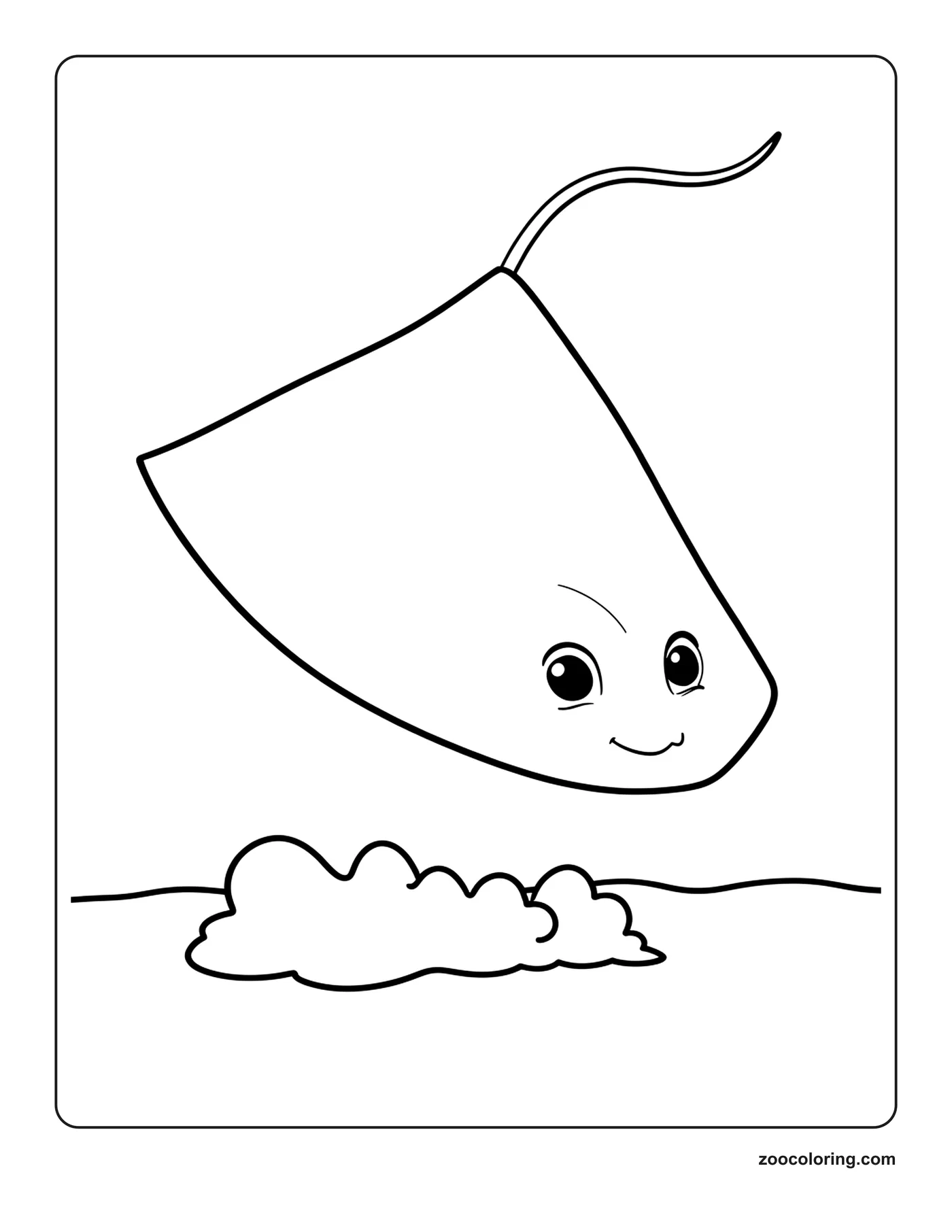
A Stingray Rising Off the Sand
A ray lifts away from the bottom with a puff of sand below.
Download PDF -
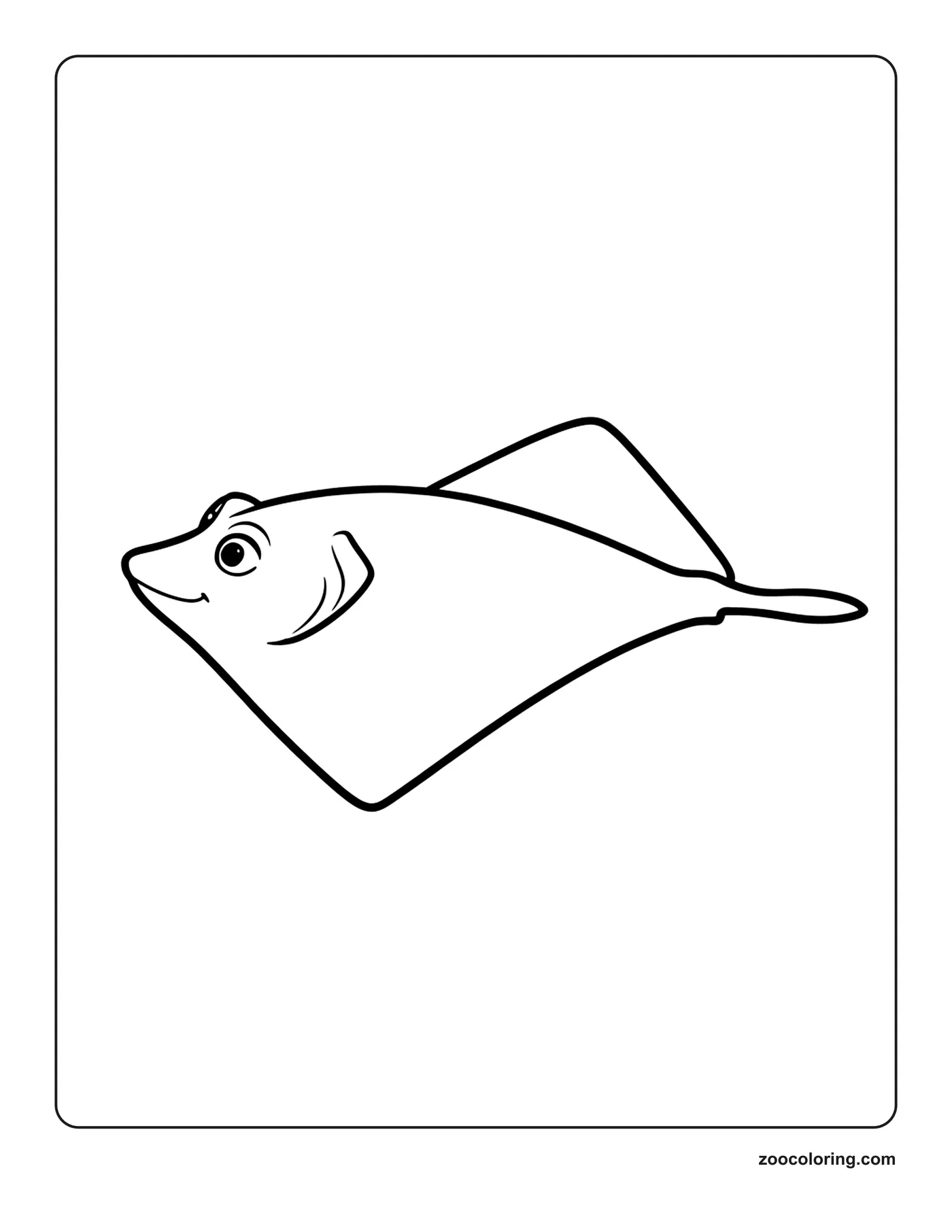
A Southern Stingray Side View
A side view showing how thin and flat a stingray really is.
Download PDF -
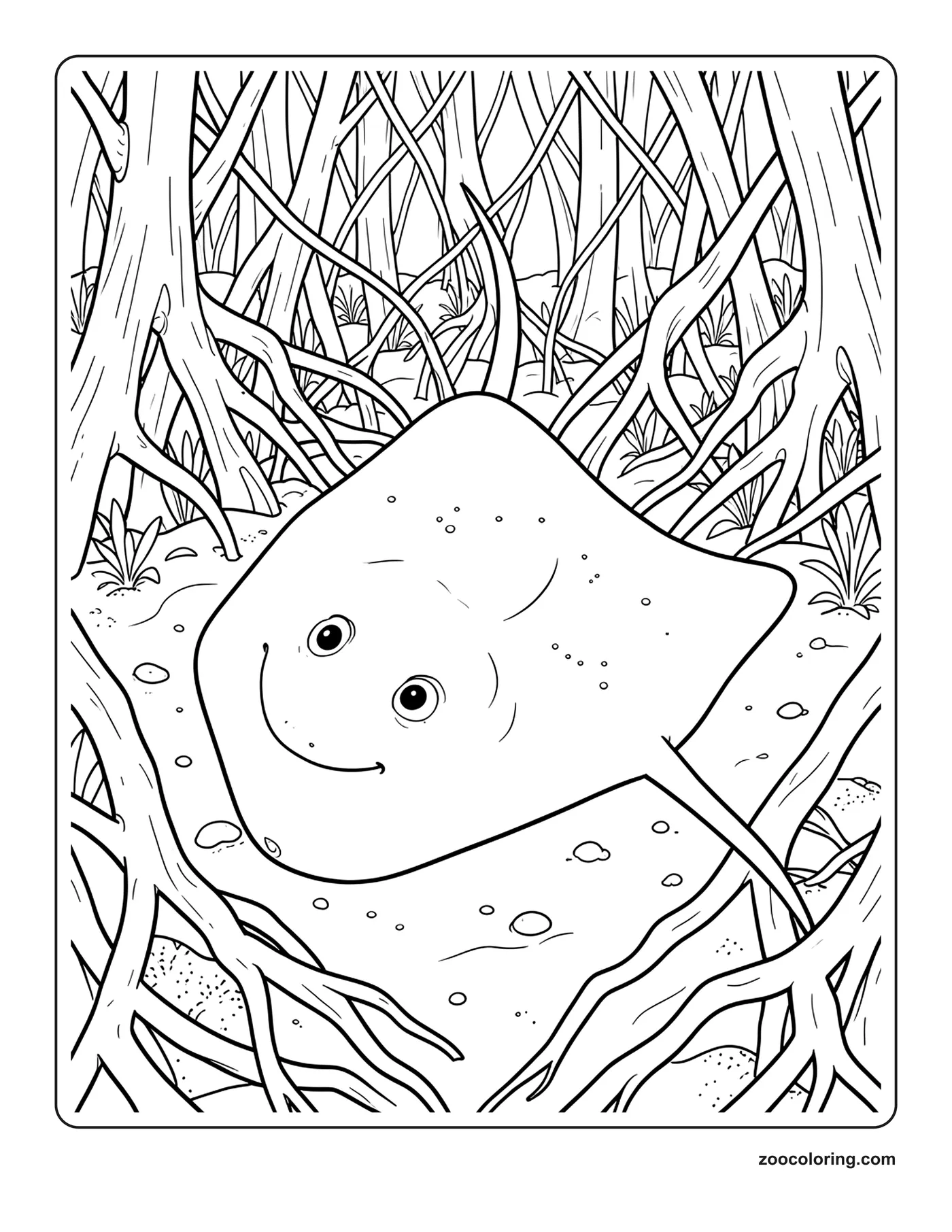
A Stingray in Mangrove Shallows
A ray rests among the tangled underwater roots of mangrove trees.
Download PDF -
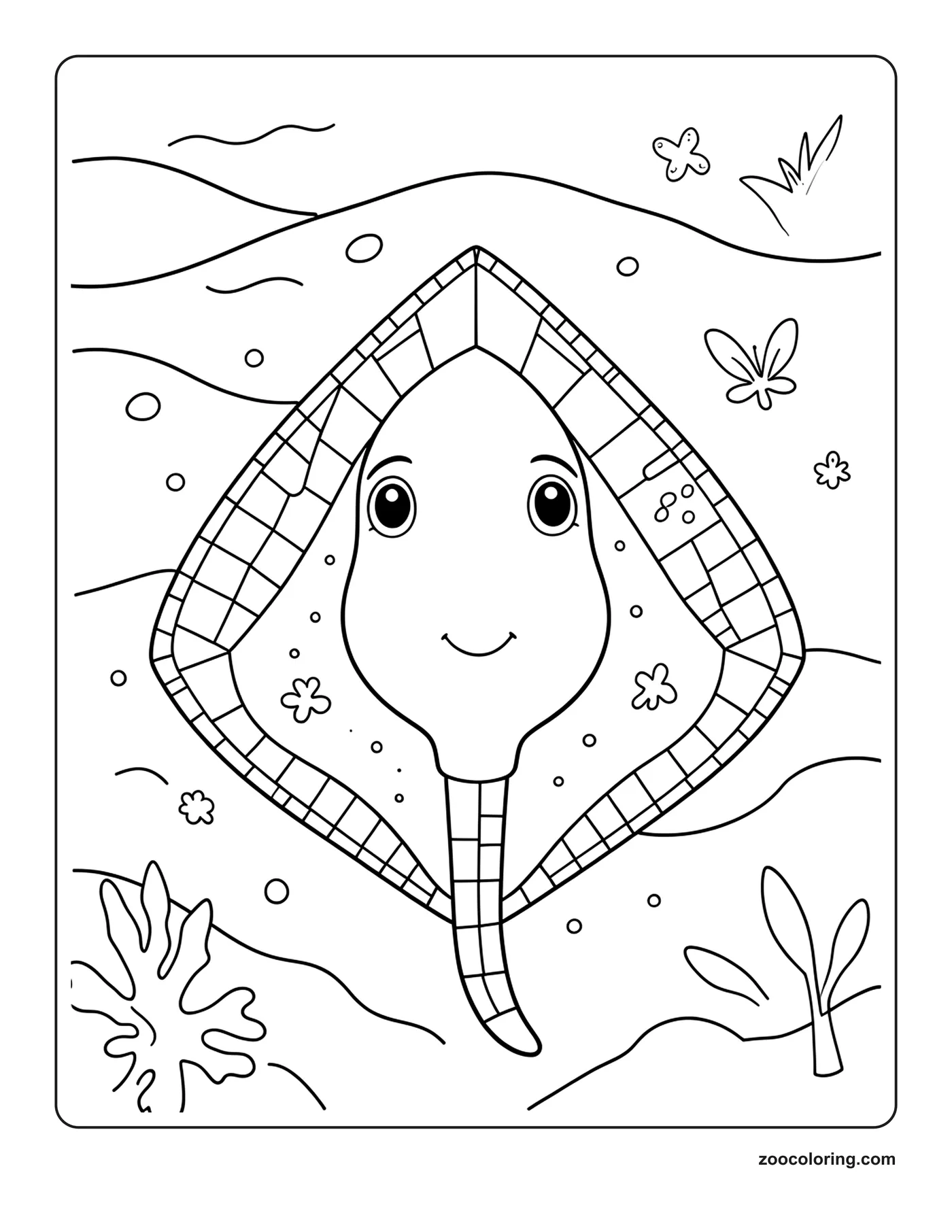
A Stingray Mosaic
A ray made from many small tile shapes, great for slow coloring.
Download PDF -
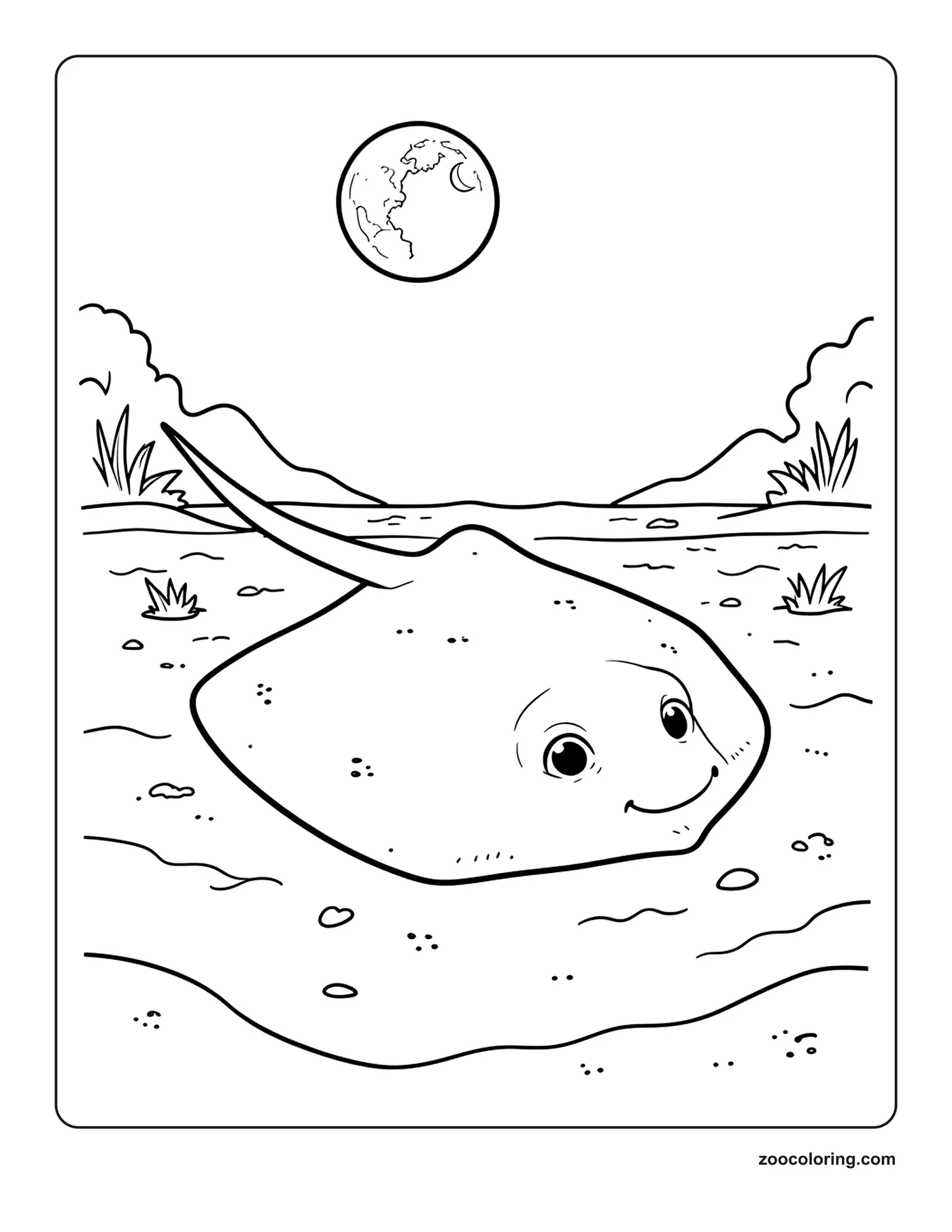
A Stingray at Night Under the Moon
Moonlight filters down onto a ray hunting over the dark sand.
Download PDF
Stingray Facts
- A stingray's flat body is a wide disc formed by its pectoral fins, which reach forward around the head.
- Openings called spiracles sit on top of the head near the eyes. They let a ray draw in water while resting on the bottom.
- Many stingrays bury themselves in sand or mud to hide from predators and prey.
- The barbed spine on the tail is used for defense, not for hunting. Stingrays are not aggressive.
- Tail spines are shed and replaced over time, so a ray may briefly have two spines.
- Stingrays give birth to live pups. A southern stingray usually has a litter of about two to ten.
- Stingrays can sense the tiny electric fields made by animals hidden in the sand.
- They feed on bottom animals such as clams, crabs, shrimp, worms and small fish.
Sources: Animal Diversity Web (University of Michigan), Florida Museum of Natural History, Smithsonian's National Zoo, National Park Service.
Tips for Coloring a Stingray
- Southern stingrays are olive brown or gray on top and white underneath. Pick a sandy brown that matches the seafloor.
- Blue-spotted stingrays have a tan or yellow-brown disc with bright blue spots. Leave a pale ring around each spot.
- Shade the middle of the disc a little darker and fade toward the edges so the ray looks raised, not flat.
- Draw sand with tiny dots and soft ripple lines in tan and gold. Add a small shadow under the ray.
- Keep the tail spine a grayish tone and the long tail darker toward the tip.
- Turquoise water with pale light streaks makes shallow-sea scenes feel bright and clear.
How to Print
Tap Download PDF under any page. Each PDF is one sheet sized for US Letter and A4; choose “Fit to page” in the print window if your printer adds margins. Plain printer paper works for crayons and pencils; for markers, a heavier paper keeps the colors from bleeding through.